
Why the Best Mountain Views Are Not Always Found at Famous Viewpoints
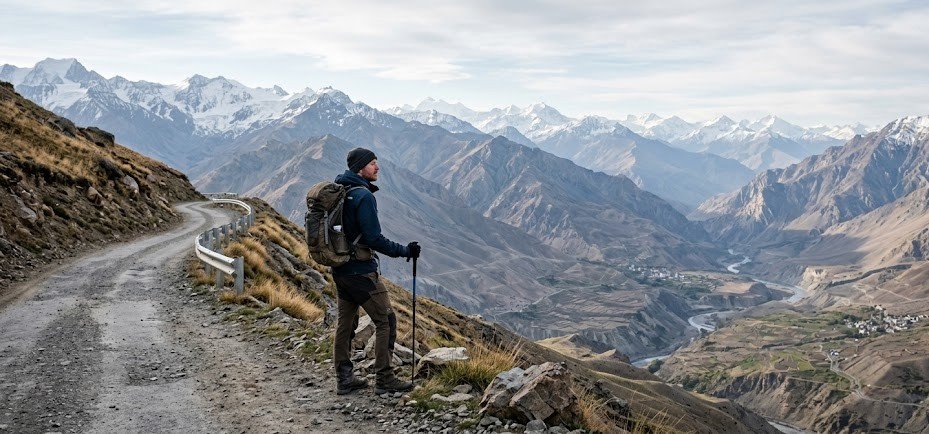
When people plan a mountain trip, they often begin by searching for the best viewpoints, the most famous sunrise locations, panoramic lookouts, and places that appear repeatedly in travel guides and social media posts. There is nothing wrong with planning to visit those places. Famous viewpoints are often popular because they offer wide perspectives and memorable scenery.
But some of the most interesting mountain views are not always found at the places marked on a map.
Sometimes the landscape appears unexpectedly while travelling along a mountain road. Sometimes it opens up during an ordinary walk. It may appear through a window while taking a break, between moving clouds after a period of poor visibility, or from a quiet place where there was no expectation of finding anything remarkable.
These moments are part of what makes mountain travel different. A famous viewpoint gives travellers somewhere specific to reach. An unexpected view, on the other hand, becomes part of the journey itself.
The best mountain view for one traveller may not be the highest, most photographed, or most frequently recommended. Sometimes it is simply the landscape that appeared at the right moment, when the traveller happened to slow down and look around.
Famous Viewpoints Are Popular for a Reason
It is worth saying clearly that famous viewpoints do not become popular without reason. Many offer wide visibility, convenient access, a clear perspective of the surrounding landscape, or particularly interesting conditions at certain times of day.
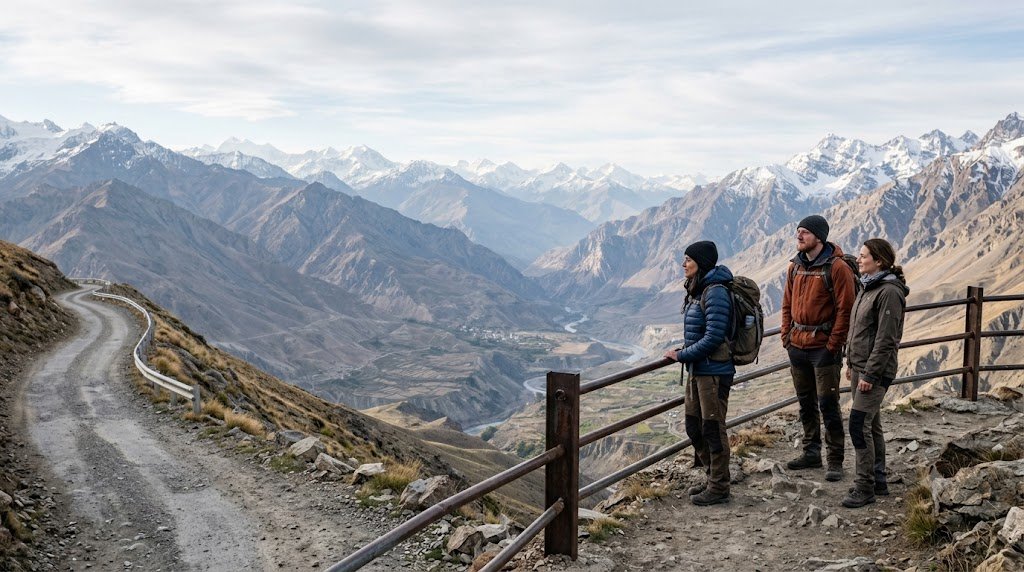
A well-known viewpoint can make it easier for travellers to experience a large section of a mountain region without needing to spend hours searching for the right location. Some viewpoints are also naturally positioned to offer open views across valleys, forests, distant ridges, or surrounding settlements.
For first-time visitors, these places can provide a useful introduction to a destination. They are often easy to identify, relatively accessible, and already recognised as places where people can stop and appreciate the landscape.
The point is not to suggest that travellers should avoid famous viewpoints. Many are genuinely worth visiting.
The difference is in recognising that famous viewpoints are only one way to experience mountain scenery. When travellers focus entirely on reaching a particular location, they can sometimes overlook the landscapes appearing throughout the rest of the journey.
A mountain destination is not simply made up of its most photographed viewpoints. The roads, walking paths, changing weather, villages, open spaces, and everyday moments between major stops can also offer memorable perspectives.
Some of the Best Mountain Views Appear During the Journey
Mountain landscapes are rarely revealed all at once. As travellers move through changing elevations and terrain, the view can shift constantly.
A road may curve around a hillside and suddenly open toward a valley. A section of forest may clear briefly and reveal distant ridges. A traveller sitting near a window may notice how the landscape changes as the journey continues.
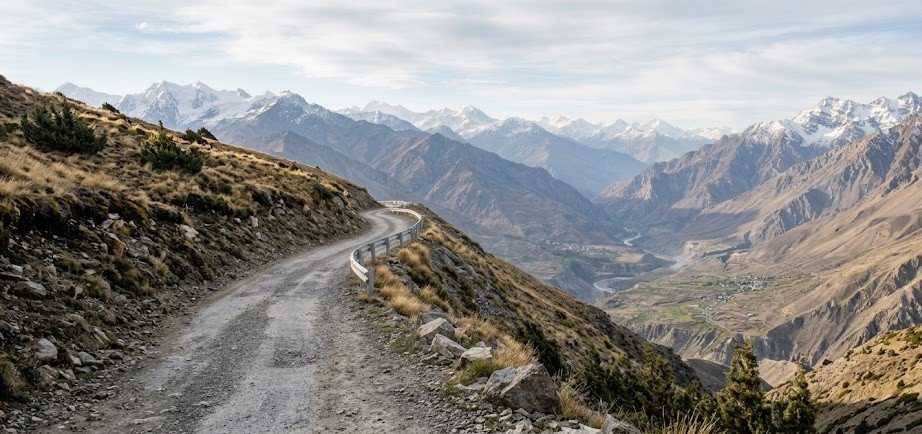
This is one reason why the journey itself can become an important part of experiencing the mountains.
Travellers do not always need to arrive at a designated viewpoint before they begin paying attention. Looking outside during a journey can reveal changing layers of landscape that would be missed if the focus remained entirely on the final destination.
The experience may include:
- A valley gradually becoming visible as the road climbs.
- Distant mountains appearing between trees.
- Clouds moving across a ridge.
- A brief stop revealing a completely different perspective.
- A familiar landscape changing as the traveller approaches it from another direction.
These are not necessarily better than the views from famous locations. They are simply different because they are part of movement rather than arrival.
This is also why the experience of travelling through mountains can feel visually varied. The landscape is constantly changing around the traveller, and each turn, elevation, and direction can create another perspective.
The View You Didn’t Plan to Find
There is something distinctive about a view that was not part of the itinerary.
A famous viewpoint comes with expectations. Travellers may already know what the landscape is supposed to look like because they have seen photographs online or heard recommendations from others.
An unexpected view arrives without that preparation.
Perhaps someone turns onto a quieter road and notices an open valley. Perhaps they stop briefly and look in a direction they had not considered before. Perhaps clouds move apart for a few minutes and reveal a mountain that had been hidden for most of the day.
The landscape itself may not be objectively more impressive than a famous viewpoint. What changes is the context in which it is discovered.
The traveller was not necessarily searching for the moment. There was no checklist involved and no expectation to recreate a photograph seen elsewhere.
That is why unexpected mountain views can sometimes feel especially personal. They belong to a particular journey and a particular moment rather than to a standard travel itinerary.
A traveller may remember the location because of what happened around it: the weather at the time, the conversation they were having, the direction they were walking, or simply the surprise of noticing the landscape when they were not actively searching for it.
Mountain Views From Ordinary Places
One of the easiest ways to overlook beautiful mountain scenery is to assume that a good view must come from a famous attraction.
In reality, mountain views can appear from many ordinary places.
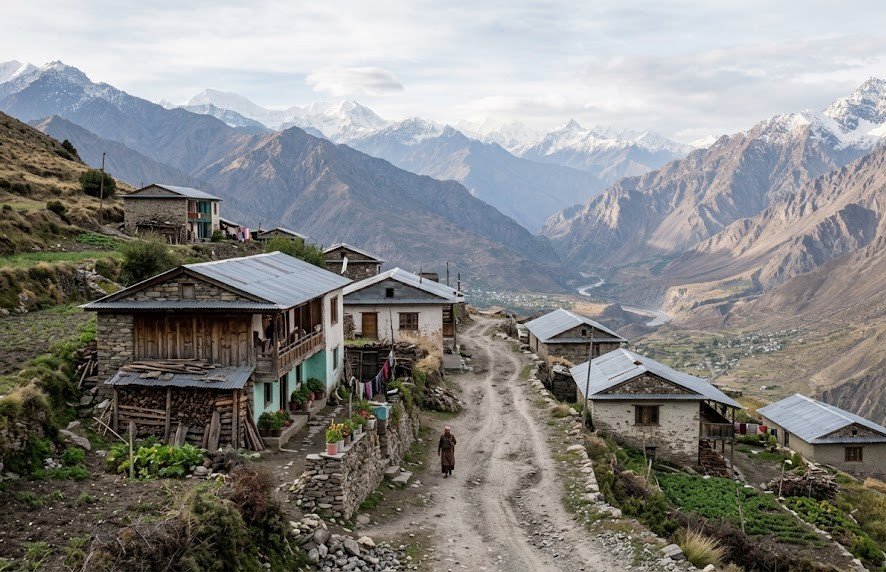
A quiet village road may open toward distant hills. A walking path may provide a new angle on the surrounding terrain. A roadside stop may reveal a valley that was hidden moments earlier. A café, window, balcony, or outdoor seating area may offer a view that becomes part of an otherwise ordinary break in the day.
The important point is not that every ordinary location has an extraordinary view. Many do not. Mountain destinations vary enormously, and visibility depends on terrain, weather, buildings, trees, and the traveller’s position.
But travellers often become more aware of their surroundings when they stop expecting scenery to appear only at officially recognised attractions.
A landscape does not need a signboard or a ticket counter to be worth noticing.
Sometimes the most satisfying perspective comes from an ordinary place because there is no pressure to move on quickly. A traveller may have time to sit, observe the changing light, or simply notice details that would be missed during a short stop at a busy attraction.
Weather Can Completely Change the Same Landscape
A mountain view is never completely separate from the weather around it.
The same landscape can look very different depending on clouds, mist, rain, visibility, and changing light. A distant ridge that appears sharply defined in clear conditions may become partly hidden an hour later. Clouds can move across valleys and change the visible shape of the landscape.
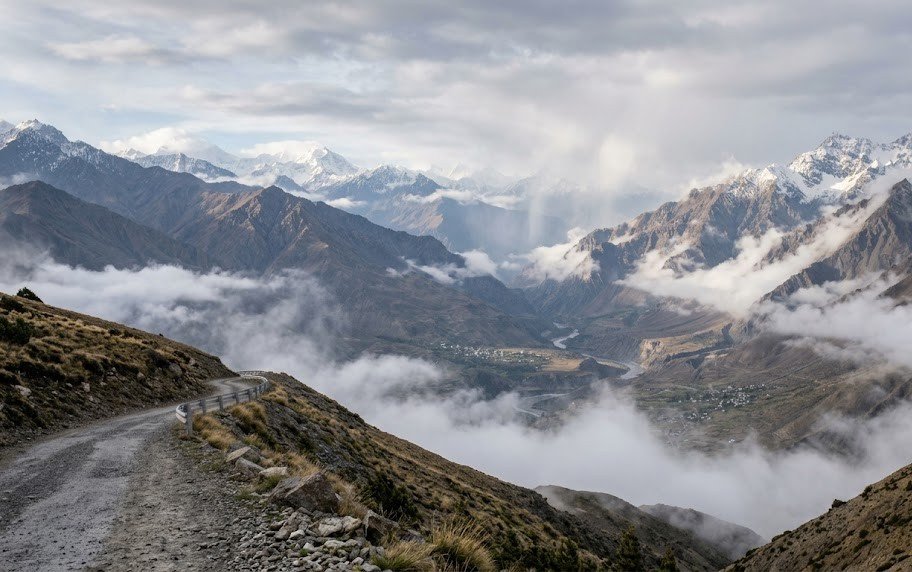
This is one reason why travellers sometimes have very different experiences of the same location.
A viewpoint visited on one morning may look entirely different later in the day. A mountain that seems distant and sharply visible in clear conditions may disappear behind cloud cover. After rain, the atmosphere may change again.
Weather does not simply determine whether a view is “good” or “bad.” It changes what the traveller sees.
Clear skies can reveal greater distance and detail. Cloudy conditions can draw attention to nearer hills and forests. Mist can reduce visibility while also changing the sense of depth and scale.
For travellers who stay in one area for longer, this becomes especially noticeable. The same window, road, or open space can offer several different visual experiences over the course of a day.
Rather than assuming that only perfect weather creates worthwhile scenery, it can be useful to recognise that changing conditions are part of how mountain landscapes are experienced.
Timing Changes What You See
Time of day can also change the appearance of beautiful mountain views.
Early morning may offer a quieter atmosphere and different light from the middle of the day. As the sun moves, shadows change across slopes and valleys. Some areas become brighter while others move into shade.
Afternoon conditions can bring another perspective. Depending on the weather and terrain, the landscape may appear clearer, softer, brighter, or more layered than it did earlier.
Evening changes the scene again.
This does not mean that there is one universally best time to look at the mountains. The answer depends on the location, weather, season, direction, and the kind of landscape a traveller wants to observe.
The useful habit is simply to look more than once.
Travellers who only visit a place briefly may see one version of the landscape. Those who spend more time in the same area may notice how much the scenery changes without travelling anywhere else.
A mountain view is not always a fixed image waiting to be photographed. It is often something that changes throughout the day.
Why Staying Longer Can Change the Way You See the Mountains
There is a difference between arriving somewhere, taking photographs, and immediately moving on, and spending enough time in one place to notice what changes.
When travellers stay longer, they may see the surrounding landscape under different conditions. A view that seemed ordinary in the afternoon may look completely different the following morning. Clouds may move through a valley and later reveal distant ridges that were not visible before.
Staying longer can also reduce the pressure to constantly search for the next attraction.
Instead of following a pattern of arrival, photograph, and departure, travellers may have more opportunities to notice the surroundings naturally.
They may observe:
- Morning light changing across the landscape.
- Clouds moving through valleys.
- Visibility changing after rain.
- Different perspectives while walking around the same area.
- How the mountains appear at different times of day.
This does not mean that every traveller needs a long holiday to appreciate mountain scenery. Even a short stay can include moments of observation.
The difference is often about allowing some time for the destination to reveal more than one version of itself.
This approach also fits naturally with a more relaxed style of mountain travel. Instead of treating every hour as something that must be filled with activities, travellers can leave space for the ordinary moments when the landscape becomes noticeable on its own.
The Difference Between Photographing a View and Experiencing It
Photography is an important part of modern travel. A photograph can preserve a moment, help people remember a journey, and allow travellers to share places with others.
There is nothing inherently wrong with reaching for a camera when a landscape appears.
But there can also be value in spending a few moments looking before taking the photograph.
Mountain scenery changes depending on movement, sound, weather, and time. A photograph captures one frame, while being present in the landscape includes everything happening around that frame.
For some travellers, taking a photograph is part of experiencing the view. For others, the most satisfying moment comes after the camera is put away.
Neither approach is necessarily better.
The important thing is not to let the search for a perfect photograph become the only way a landscape is experienced. Sometimes people move quickly from one location to another because they are trying to collect images of every recommended viewpoint.
In doing so, they may spend less time actually noticing the scenery around them.
A good travel photograph can be meaningful. But so can the few minutes spent simply looking at the landscape without immediately deciding what to do with it.
Why the Same View Can Feel Different to Different People
A mountain landscape does not mean exactly the same thing to everyone.
A solo traveller may experience a quiet view as a personal pause during a journey. A couple may remember it because they experienced the moment together. A family may associate the landscape with a shared stop during a holiday. Friends may remember the conversation or unexpected event that happened while they were there.
The same view can therefore become part of very different experiences.
This is one reason why it is difficult to define the “best” mountain view in purely objective terms. A landscape may be visually impressive, but the traveller’s experience also depends on timing, company, mood, weather, and context.
A famous viewpoint may be exactly what one person hoped to see. Another traveller may remember a much quieter location that was never part of the original plan.
The landscape matters, but so does the moment in which it is experienced.
That is why travel recommendations can be useful without being universal. Someone else’s favourite viewpoint may become part of your journey, but your own most meaningful view may appear somewhere entirely different.
Mountain Views Are Often Better When You Stop Chasing Them
This does not mean travellers should stop visiting famous viewpoints.
It means they do not need to spend every moment chasing the most famous, highest, most photographed, or most recommended location.
When the entire journey becomes a search for the next “best” view, the landscape between those destinations can begin to feel like background scenery.
A more observant approach leaves room for curiosity.
Travellers can:
- Look around during ordinary stops.
- Notice how the landscape changes during a journey.
- Pay attention when weather conditions shift.
- Take time during walks without constantly searching for the next attraction.
- Be flexible when an unplanned view appears.
This approach does not require a complicated travel philosophy. It simply involves paying attention to what is already happening around you.
Some of the most memorable scenery may still come from a famous viewpoint. But travellers who remain open to unexpected moments are less likely to overlook everything else.
The Himalayas Offer More Than Famous Viewpoints
The Himalayas provide countless ways to experience changing landscapes without limiting the experience to designated viewpoints.
The scenery can appear during everyday movement through the region. Roads connect communities and settlements across changing terrain. Villages offer different perspectives from higher or lower elevations. Walking routes, open spaces, and places of rest can all create opportunities to observe the surrounding landscape.
The experience of Himalayan views is therefore often connected to movement and time.
A traveller may see one range from the road and another from where they are staying. Clouds may hide distant mountains in the morning and reveal them later. A landscape that seems familiar can change when viewed from another direction.
This variety is part of what makes mountain travel visually interesting.
Himachal Pradesh offers a wide range of mountain environments, and travellers exploring different parts of the state can encounter changing terrain, valleys, forests, settlements, and elevations. The official Himachal Pradesh tourism website provides a broader introduction to the state’s varied mountain destinations and travel experiences.
Around destinations such as Dalhousie, travellers may naturally encounter landscapes beyond the locations that appear most frequently in standard sightseeing plans. The wider journey through a mountain region can often be as visually interesting as the individual places people originally planned to visit.
The View From Where You Stay Can Become Part of the Journey
Where travellers stay can influence how they experience a mountain destination.
Accommodation is not only a place to return to after sightseeing. Depending on its surroundings and location, staying somewhere can create opportunities to experience the destination at a different pace.
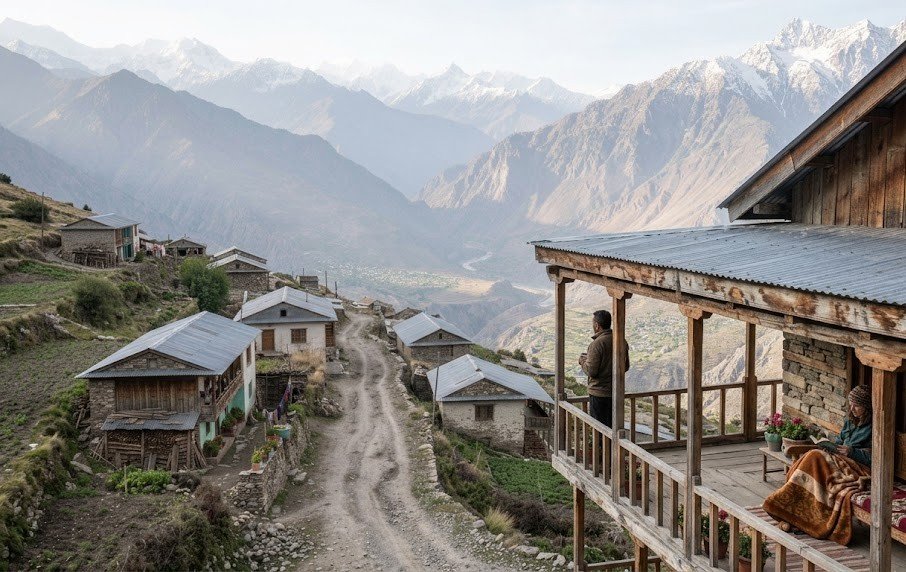
A traveller who spends time in one area may notice the landscape during several different moments:
- Early in the morning.
- During changing weather.
- In the afternoon.
- As evening approaches.
- Between planned activities.
This is different from seeing a landscape only during a short stop.
It is important not to assume that every mountain stay offers panoramic scenery. The view depends on the property and its location.
However, the broader point remains that where people choose to spend their time can shape how they experience a destination. A stay that allows travellers to slow down can make room for the ordinary moments that are often missed when every hour is structured around sightseeing.
For travellers interested in a quieter approach to the mountains, the accommodation itself can become part of the overall travel experience rather than simply the final stop at the end of the day.
Experiencing the Mountains With EVA Cabins
A mountain stay can shape the rhythm of a journey.
For travellers visiting the Dalhousie region and looking for accommodation that feels connected to a broader mountain travel experience, EVA Cabins can be part of a more considered approach to the destination.
The idea is not to treat a stay as another attraction that must compete with every famous viewpoint. Sometimes the experience of being in the mountains comes from having enough time to notice the environment around you, whether that means observing changing weather, taking an unplanned walk, or simply slowing down between activities.
EVA Cabins fits naturally into this idea of thoughtful mountain travel by encouraging travellers to see their stay as part of the overall journey rather than only a place to sleep between sightseeing stops.
The destination remains the central experience. Where you stay simply influences how much time and attention you are able to give to it.
Finding Your Own Mountain View
By the end of a mountain trip, travellers may have visited the places everyone recommended. They may also remember something completely different.
Perhaps it was a view that appeared while travelling.
Perhaps it came from a quiet road with no sign identifying it as a viewpoint.
Perhaps it was the same landscape seen again after the weather changed.
Perhaps it was an ordinary moment that became meaningful because there was no expectation attached to it.
This is why the search for the “best” mountain view can sometimes be limiting.
Travel recommendations are useful, and famous viewpoints often deserve their popularity. But the landscapes people remember are not always the ones that received the most recommendations before the trip.
A mountain journey creates many opportunities for observation. The most meaningful view may appear while walking, travelling, resting, talking, or simply looking in a direction that was not part of the original plan.
There is value in having a list of places to visit. There is also value in leaving enough room for something unexpected.
Conclusion: Look Beyond the Famous Viewpoint
Famous viewpoints deserve their place in mountain travel. They often offer remarkable perspectives and can help travellers understand the scale and geography of a destination.
But they are not the only places where meaningful mountain views can be found.
Some landscapes appear during the journey. Others emerge when clouds move, when the light changes, or when travellers spend enough time in one place to see the scenery differently.
The best view may not always be the most famous, the most photographed, or the one recommended by everyone else.
Sometimes it may simply be the landscape that appeared at the right moment.
For travellers exploring the Himalayas, paying attention to the journey can be just as important as reaching the destinations marked on the itinerary. Roads, ordinary places, changing weather, and quiet pauses can all become part of the experience.
And when planning a mountain stay around Dalhousie, taking a more thoughtful approach to where and how you spend your time can leave room for those unexpected moments that no travel checklist can fully predict.
Frequently Asked Questions About Mountain Views
1. Where can you find the best mountain views?
The best mountain views can be found at famous viewpoints, but they can also appear during journeys, walks, roadside stops, and ordinary moments. The experience depends on the location, weather, timing, and personal perspective.
2. Are famous viewpoints always worth visiting?
Many famous viewpoints are worth visiting because they often provide wide and accessible views of the surrounding landscape. However, travellers should not assume that these are the only places where memorable scenery can be found.
3. Why do mountain views look different throughout the day?
Changing light, shadows, clouds, and visibility can alter how a mountain landscape appears. The same view may look noticeably different in the morning, afternoon, and evening.
4. How does weather affect mountain scenery?
Weather can change visibility, light, colour, and the amount of the landscape that can be seen. Clouds and mist may hide distant areas, while clearer conditions can reveal greater detail and distance.
5. Why can unexpected mountain views feel memorable?
Unexpected views can feel personal because they were not necessarily part of a planned itinerary. They often become connected with a particular journey, moment, conversation, or change in the weather.
6. Is it better to visit a viewpoint in the morning or evening?
There is no single answer. The best time depends on the location, direction of the landscape, weather conditions, and the type of light a traveller prefers.
7. Can accommodation affect the mountain travel experience?
Yes. Where travellers stay can influence how much time they spend observing the destination. Staying longer in one area may allow people to experience changing weather and landscapes at different times of day.
8. How can travellers experience mountain scenery beyond famous viewpoints?
Travellers can pay attention during journeys, walks, ordinary stops, and changing weather conditions. Leaving some flexibility in an itinerary can also create opportunities to notice landscapes that were not part of the original plan.