
How to Plan a Relaxing Himalayan Getaway Without Overplanning
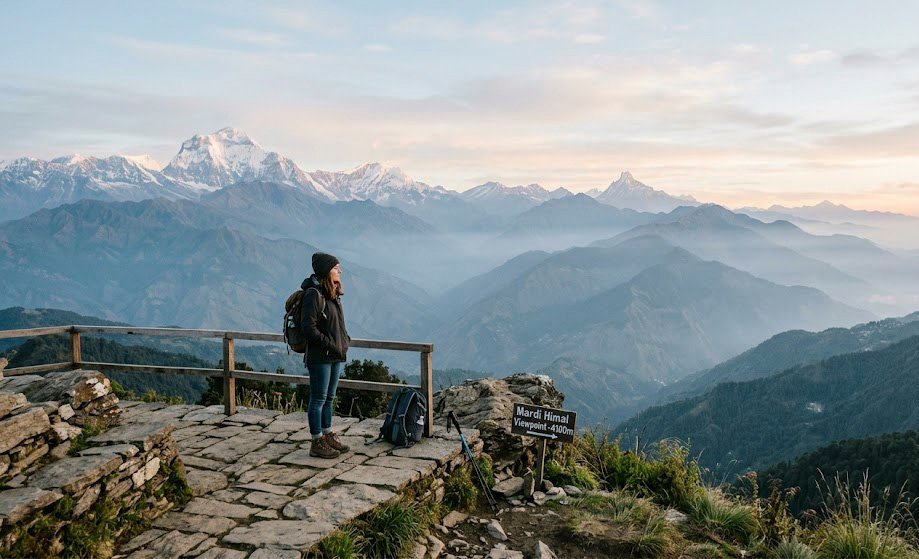
Why Himalayan Holidays Don’t Need a Packed Schedule
There is a particular kind of travel fatigue that comes from trying to make every minute of a holiday count.
You leave home excited about the mountains, arrive after a long journey, and then discover that your three-day trip has 14 places on the itinerary. Breakfast has a deadline. A viewpoint has a fixed arrival time. Lunch has to fit between two drives. By evening, you’re checking tomorrow’s schedule instead of enjoying where you are.
The irony is that this can happen most easily on a mountain holiday.
People travel to the Himalayas for space, scenery, slower mornings, quiet roads, forests, local food and time away from their usual routines. Yet the way the trip is planned can recreate the same rushed rhythm they were hoping to leave behind.
A relaxing Himalayan getaway does not require seeing everything.
It requires enough planning to make the journey comfortable, while leaving enough room for the actual experience.
That might mean choosing one meaningful outing instead of four. It might mean returning to your accommodation early. It might mean having breakfast without immediately checking the clock. And sometimes, it simply means looking at the weather, changing your plan and accepting that an unplanned afternoon is not wasted time.
The goal is not to do less for the sake of doing less.
It is to make room for the things that made you want a Himalayan holiday in the first place.
What Does a Relaxing Himalayan Getaway Actually Mean?
There is no universal definition of a relaxing mountain holiday.
For one traveller, it might mean reading beside a window for an hour. For another, it might mean taking a long walk without deciding where it has to end. A couple may want uninterrupted time together, while a family may simply want a day without everyone asking, “What’s next?”
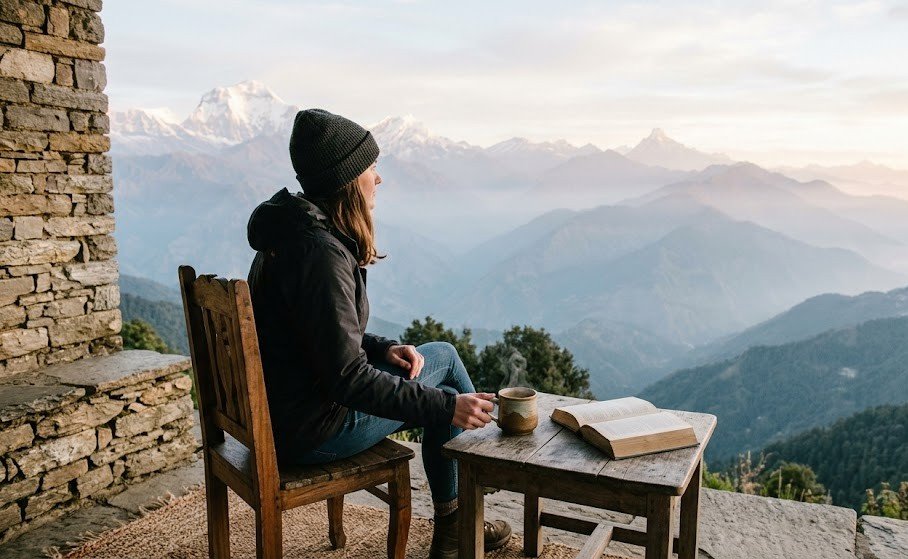
A peaceful Himalayan holiday could include:
- A slow breakfast
- A short nature walk
- An unhurried meal
- Time at the accommodation
- A scenic drive without multiple stops
- Reading or listening to music
- Conversations that aren’t interrupted by an itinerary
- Exploring one area properly
- Sitting outdoors and watching the landscape change
- Leaving an afternoon completely open
The important distinction is between doing less and experiencing more deeply.
Suppose you have one afternoon and two choices.
You could drive to three different places, spend 20 minutes at each, take photographs, eat quickly and rush back.
Or you could choose one place, spend longer there, have a relaxed meal and return before you feel exhausted.
The second option may produce fewer photographs.
It can still produce a better holiday.
A mountain escape does not have to be measured by the number of attractions you can fit into it.
Start With the Experience You Want — Not a List of Places
Before searching for destinations, ask yourself a simple question:
What do I want this trip to feel like?
That question is often more useful than immediately opening a map and saving 30 locations.
Perhaps you want:
Rest
If rest is the priority, choose fewer activities and place more importance on the quality and surroundings of your accommodation.
Nature
You may prefer a destination where forests, walking routes and open landscapes are easily accessible without requiring long drives every day.
Adventure
If your priority is hiking or other outdoor activities, you can build the trip around one or two experiences rather than trying to combine every available activity.
Couple Time
A couple planning a mountain escape may value privacy and unstructured time more than a long list of attractions.
Family Time
Families may benefit from a flexible schedule that leaves room for children’s energy levels, meals and unexpected changes.
Solitude
Solo travellers often have the greatest freedom to leave a day open. You do not necessarily need a plan for every hour when the purpose of the trip is simply to slow down.
A Digital Break
If you want distance from your usual routine, consider how much connectivity and screen time you actually want rather than filling every free period with online research.
Once you know the experience you want, destination selection becomes easier.
Instead of asking, “What can I see there?” you start asking, “Can I have the kind of holiday I want there?”
That is a much better filter.
Choose a Mountain Destination That Matches Your Travel Style
Not every Himalayan destination is equally suitable for a slow holiday.
A destination may look beautiful online but still be a poor choice for your particular trip if getting around requires hours of daily driving or if the activities you want are spread far apart.
When choosing a destination, consider:
Travel time
The journey matters.
If your trip is only three days long, spending most of the first and last day travelling can significantly change how much time you actually have at the destination.
Accessibility
Consider how you will arrive and how much movement will be required after arrival.
Mountain roads naturally involve terrain, bends and changing travel conditions. A destination that looks close on a map may take considerably longer to reach than a similar distance on a plain.
Crowds
If quiet is important to you, research the general character of the destination and the period in which you plan to travel.
Landscape
Ask whether you want forests, valleys, open mountain views, villages or a combination of these.
Activities
Choose somewhere where the activities you genuinely enjoy are available without forcing you into a packed daily schedule.
Accommodation
This becomes particularly important when relaxation is the main objective. If you want to spend meaningful time at your stay, choose accommodation that makes that possible.
Daily driving
This is one of the most overlooked factors.
A destination can have plenty to see, but that doesn’t mean you need to see all of it during one trip.
Himachal Pradesh offers a wide range of mountain environments, and Dalhousie is one example of a destination where travellers can combine nature, walks, local experiences and slower days. The official Himachal Tourism site describes Dalhousie as a hill station spread across several hills, with forest trails and mountain landscapes, while Incredible India highlights its natural and architectural character.
The point is not to build a Dalhousie checklist.
It is to choose a mountain setting where your preferred pace is realistic.
Plan the Journey, But Don’t Plan Every Hour
Some parts of a Himalayan holiday should absolutely be planned in advance.
Others don’t need to be.
A useful approach is:
Plan the framework, not every moment.
Plan these things
- How you will reach the destination
- Where you will stay
- Your broad route
- Essential transport arrangements
- Important reservations
- Weather awareness
- Any permits or local requirements that apply to your route
- A rough idea of the experiences you don’t want to miss
Leave these things flexible
- Exact breakfast duration
- Every meal
- Every viewpoint
- Every photograph stop
- Every walking route
- What time you return to your accommodation
- Which optional activity you do
- What you do with an unexpected free afternoon
This approach gives you structure without creating pressure.
For example, instead of writing:
9:00 breakfast → 9:45 departure → 10:15 viewpoint → 11:00 next stop → 12:00 lunch → 1:00 attraction → 3:00 café → 4:00 return
you could simply write:
Morning: relaxed breakfast and one outing.
That leaves you room to respond to the actual day.
Try the “One Main Plan Per Day” Approach
If you change only one thing about how you plan mountain holidays, try this.
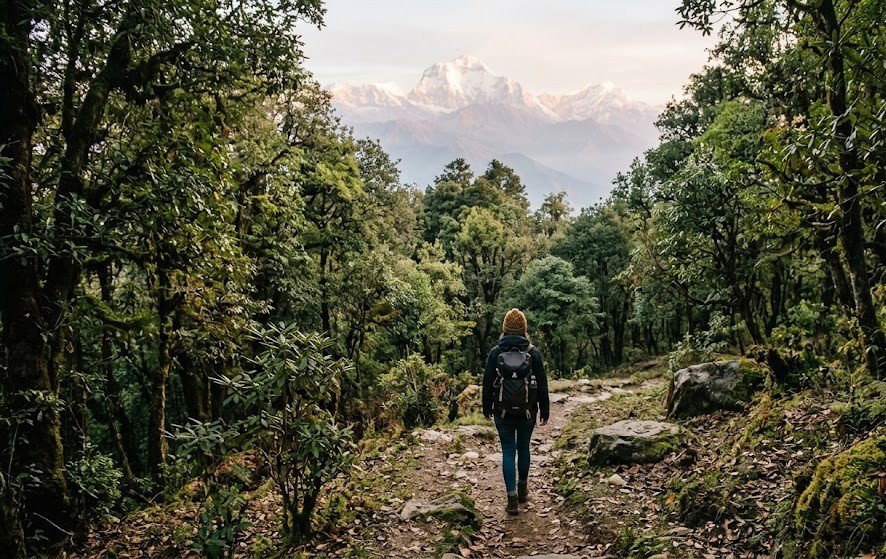
Choose one main outing or experience per day.
Everything else is optional.
This does not mean spending the entire day inside your accommodation. It means giving the main activity enough space that you don’t have to rush through it.
For example:
Morning: Slow breakfast and time around the property.
Midday: One planned outing.
Afternoon: Return, eat, rest or take a short walk.
Evening: Keep it open.
The main outing could be a nature walk, a scenic drive, a cultural experience, a meal somewhere you’ve wanted to try or another activity that genuinely interests you.
The important part is not what you choose.
It is what you deliberately leave out.
With one main plan, you reduce the likelihood of:
- Constant clock-watching
- Rushing meals
- Spending the entire day in a vehicle
- Making decisions every 30 minutes
- Feeling guilty about skipping something
- Returning to your accommodation exhausted
This is especially useful for couples and families, where different people naturally have different energy levels.
Leave Space for Weather, Rest and Spontaneous Experiences
Mountain travel requires a little flexibility.
Weather can affect visibility, outdoor activities and road conditions, and local conditions can change during your trip. That is one reason a rigid itinerary can become stressful.
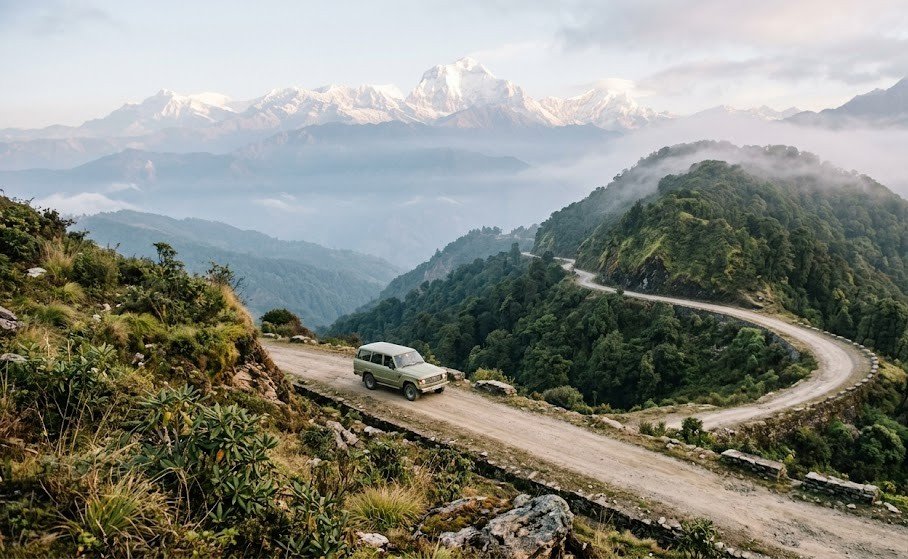
Instead of treating your itinerary as a contract, treat it as a guide.
If weather changes, you may decide to postpone an outdoor activity.
If everyone is tired after the journey, you may choose a slower morning.
If you discover a pleasant local café, you may stay longer than expected.
If the landscape looks particularly good from your accommodation, you might decide that there is no need to leave immediately.
These are not failures of planning.
They are part of travelling.
Before longer drives or outdoor plans, check current weather and relevant local conditions rather than relying only on information gathered when you first booked the trip.
It is also sensible to keep a simple backup option for important activities.
The backup does not need to be another full itinerary.
Sometimes the backup is simply:
Stay local. Eat well. Walk if conditions allow. Rest.
That is enough.
Choose Accommodation That Supports a Slower Holiday
When sightseeing is the main purpose of a trip, accommodation can sometimes become an afterthought.
For a relaxing mountain holiday, it deserves more attention.
If you are planning to spend meaningful time at your accommodation, ask:
- Is the environment peaceful enough for the kind of break I want?
- Is there somewhere comfortable to sit?
- Is dining convenient?
- Does the location make sense for the activities I actually plan to do?
- Will I enjoy being there if I decide to cancel an outing?
- Is the accommodation comfortable enough for an unplanned afternoon?
- Does the property itself contribute something to the travel experience?
That last question matters.
A good mountain stay does not have to compete with the destination.
It can complement it.
A cabin, homestay, lodge or other nature-oriented property can become part of the rhythm of the trip. You return after an outing and don’t feel that you need to immediately go somewhere else.
This is particularly useful for travellers who want a peaceful mountain holiday rather than a sightseeing marathon.
The right accommodation can make staying in feel like part of the trip rather than something you do because you’re too tired to go out.
Build Your Day Around Natural Rhythms, Not a Checklist
A relaxed mountain day does not need a complicated structure.
A simple rhythm might look like this.
Morning
Start slowly.
Have breakfast without immediately rushing out. If your accommodation has a pleasant outdoor or common area, spend some time there.
A short walk can be enough if you feel like moving.
Afternoon
Use this period for your one main activity.
Give yourself enough time to actually experience it rather than planning another destination immediately afterwards.
Have lunch without treating it as a 20-minute interruption between attractions.
Evening
Return before you are completely exhausted.
Dinner can be simple. The evening can remain open for conversation, reading, music or simply enjoying the surroundings.
This is only an example.
Your natural rhythm may be completely different.
The principle is what matters:
Don’t allow the itinerary to become more important than the day itself.
How Long Should You Stay in the Himalayas?
Trip length changes how much planning makes sense.
A Short Weekend
With two or three days, you need to be selective.
Choose a destination that is reasonably practical to reach and resist the temptation to compensate for limited time by adding more activities.
A short trip with one meaningful experience can feel better than a short trip with ten rushed stops.
Three to Four Days
This gives you more breathing room.
You can have an arrival day, one or two days with a primary activity, and a slower departure morning.
You still don’t need to fill every gap.
Longer Stays
A longer Himalayan vacation allows you to settle into the destination.
You can have an active day followed by a quiet one. You can revisit a favourite place. You can leave one morning completely free.
This is where slow travel in the Himalayas becomes particularly natural.
But longer does not automatically mean more relaxing.
If you simply extend the same overpacked itinerary from four days to eight, you have only created a longer schedule.
The goal is not duration.
It is pace.
What Should You Actually Research Before Your Trip?
A relaxed holiday still needs sensible preparation.
You simply want to spend your planning energy on the things that genuinely matter.
Route and Transportation
Know how you are reaching the destination and what the final stretch of the journey involves.
Weather
Check the forecast closer to your travel date and again before outdoor activities.
Local Conditions
For mountain road journeys, check current road and travel conditions when relevant.
Accommodation
Confirm your booking, arrival arrangements, check-in requirements and any property-specific information.
Food
If you are staying somewhere remote or away from a commercial centre, understand your dining options before arrival.
Connectivity
If staying connected matters to you, check what the property and destination can realistically provide. Don’t assume that every mountain location will offer the same connectivity as a city.
Cash and ATMs
Depending on the destination, having some cash available can be sensible, particularly if you plan to visit smaller establishments or travel beyond major commercial areas.
Medical and Emergency Information
Know where the nearest appropriate medical facility is and carry essential personal medication.
Local Rules
Check any current local requirements, restrictions or permits relevant to your route or activities.
Clothing
Pack according to the forecast, altitude and season rather than assuming that every Himalayan destination has the same conditions.
Travel Insurance
For longer or activity-heavy trips, consider whether travel insurance appropriate to your plans would be useful.
This is the kind of research that reduces uncertainty.
Researching another 40 attractions usually doesn’t.
What NOT to Overplan on a Himalayan Holiday
Some things are better left deliberately open.
Every Meal
You don’t need a restaurant reservation for every meal unless the destination or property genuinely requires it.
Every Viewpoint
A mountain holiday can survive without seeing every viewpoint listed online.
Every Photo Stop
If you stop for every potentially good photograph, the journey can become exhausting.
Take the photographs you genuinely want.
Then keep moving—or don’t.
Every Hour
There is no prize for producing the most detailed holiday spreadsheet.
Every Attraction
Missing an attraction does not mean you failed to travel properly.
Every Activity
You don’t need trekking, boating, sightseeing, shopping, photography and every other available experience in one trip.
Every Sunrise and Sunset
If you happen to see one, enjoy it.
If you’re asleep, that’s also fine.
The purpose of a holiday is not to prove that you made the most efficient use of every available hour.
A Sample 3-Day Relaxed Himalayan Getaway
This is not a sightseeing itinerary.
It is a pace template that can be adapted to different Himalayan destinations.
Day 1 — Arrive and Settle In
Keep the first day intentionally light.
Reach your accommodation, settle in, have a meal and give yourself time to adjust to the surroundings.
If you arrive early and feel energetic, take a short walk nearby.
If the journey has taken longer than expected, do nothing.
There is no reason to turn arrival day into another sightseeing day.
Main goal: Arrive without immediately needing to perform.
Day 2 — One Main Experience
Choose one activity or outing that genuinely matters to you.
It could be a nature experience, a scenic drive, a cultural visit or another destination-specific activity.
Give it enough time.
Return to your accommodation without immediately adding another attraction.
The rest of the day is yours.
You could eat, read, walk, talk, rest or simply stay outside for a while.
Main goal: Experience one thing properly.
Day 3 — Slow Morning + Optional Activity
Don’t schedule an early departure simply because you technically can.
Have breakfast.
Take a short walk if you want.
If there is one nearby experience you missed and genuinely want to do, use this as your optional activity.
Otherwise, enjoy the last few hours where you are.
Then begin your journey home with enough buffer for mountain travel.
Main goal: Leave without feeling that you needed another holiday to recover from this one.
Why Slow Travel Works So Well in the Mountains
Slow travel is not about moving slowly everywhere.
It is about giving yourself enough time to pay attention.
In the mountains, that can mean staying longer in one place instead of constantly changing locations.
You notice the landscape.
You have a conversation without checking the time.
You eat somewhere because it looks interesting rather than because it was number seven on your saved list.
You walk a little farther.
You spend an afternoon at your accommodation.
You speak with local people when the opportunity arises.
You support local cafés, shops, guides and small businesses instead of treating the destination as a collection of attractions.
There is also a practical advantage to reducing unnecessary movement.
Fewer transfers and fewer scheduled stops generally mean fewer opportunities for the itinerary itself to become the source of stress.
That does not make slow travel automatically better for everyone.
Some travellers genuinely enjoy packed road trips and active itineraries.
The point is to choose consciously.
If you went to the mountains because you wanted a quieter rhythm, your travel style should support that intention.
Planning a Relaxing Himalayan Stay in Himachal Pradesh
Himachal Pradesh offers enough variety that the same planning approach can produce very different holidays.
You could choose a destination because you want outdoor activity. You could choose another because you want cultural experiences. Or you could choose a quieter mountain setting where the accommodation and surrounding landscape are central to the trip.
For travellers who want to keep their itinerary light, the important question is not simply where to go.
It is how much movement the destination requires once you get there.
Dalhousie is one example worth considering because the town and surrounding area offer a mixture of mountain landscapes, walking opportunities, heritage and nature without requiring the trip to be structured around a long list of daily excursions. Official tourism information describes the destination across its hills, forests and walking routes, while also providing practical information on transport and local facilities.
If you’re planning a first trip to Himachal Pradesh, a broader Himachal Pradesh Travel Guide can help with general destination planning, but your own itinerary should still be shaped around the experience you want rather than around how many places you can cover.
That distinction is important.
A destination guide tells you what exists.
Your itinerary should decide what is worth your time.
How EVA Cabins Can Fit Into a Slower Mountain Escape
Accommodation becomes particularly relevant when the purpose of your trip is to slow down.
EVA Cabins in Dalhousie is one example of a stay designed around that kind of mountain experience. The property currently describes its accommodation as A-frame cabins in a forested setting, with private cabins, outdoor seating, mountain views, in-house meals and heating.
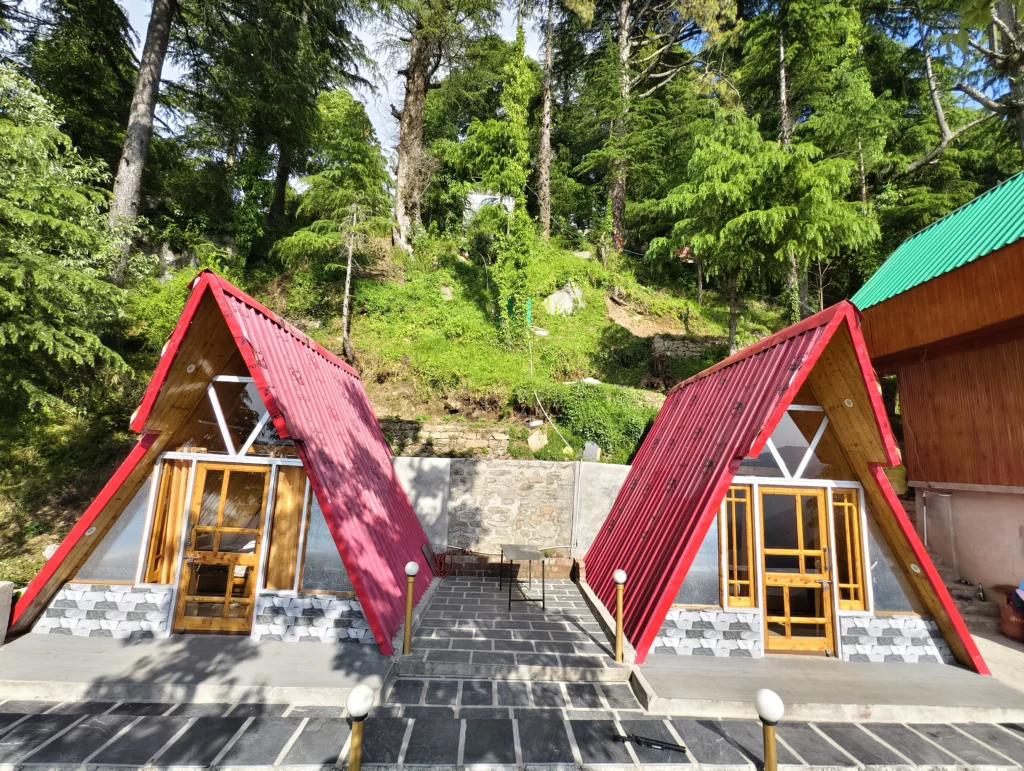
The property is also reached through a walk from its parking area rather than by driving directly to the cabins. EVA Cabins currently describes this as a roughly 15-minute walk through the woods.
That detail is worth knowing before booking because it is exactly the kind of practical information that affects how you plan a relaxing trip.
If you choose a stay such as this, you don’t necessarily need to treat the property as somewhere to sleep between sightseeing stops. The accommodation can be part of the reason for keeping the day open.
You might plan one outing, return, have a meal and spend the rest of the afternoon at the property.
For travellers who want their mountain escape to include both exploration and genuine downtime, that can be a more natural rhythm than trying to stay out all day.
The key is not that a cabin is automatically better than another type of accommodation.
It is that your accommodation should support the kind of holiday you are actually trying to have.
Simple Checklist for a Relaxing Himalayan Getaway
Before you leave, run through this list.
- Choose the feeling first: Decide whether you want rest, nature, adventure, couple time, family time or solitude.
- Pick a destination that supports it: Consider travel time, accessibility, crowds and the amount of daily driving required.
- Book comfortable accommodation: Choose somewhere you would genuinely be happy to spend an afternoon.
- Plan essential logistics: Transport, accommodation, route, weather awareness and important bookings.
- Choose one or two priorities: Decide what you genuinely don’t want to miss.
- Leave free time: Don’t turn every empty space in the itinerary into another activity.
- Check conditions: Review weather and relevant local travel information close to departure.
- Pack appropriately: Bring clothing, medicines and essentials suited to the destination and season.
- Keep plans flexible: Allow yourself to change plans when weather, energy or circumstances change.
- Don’t measure the holiday by attractions: A trip can be successful even if you return with fewer photographs than expected.
- Let the accommodation be part of the experience: Especially when the purpose of the trip is rest.
- Leave some room for the unexpected: A good holiday often contains moments you didn’t plan.
Frequently Asked Questions
How do I plan a relaxing Himalayan getaway?
Start by deciding what you want the holiday to feel like. Choose a destination and accommodation that support that experience, plan essential transport and bookings, then limit yourself to one or two meaningful activities per day.
How many days are enough for a relaxing Himalayan trip?
There is no universal number. A two- or three-day break can work if you keep the itinerary simple, while three to four days gives you more room for slower mornings and flexible plans. Longer stays can offer more breathing room, but only if you avoid filling the extra days with activities.
Is it better to have a fixed itinerary in the mountains?
A basic framework is useful, but a completely fixed itinerary can become stressful when weather, road conditions or energy levels change. Plan essential logistics in advance and leave optional activities flexible.
How can I avoid overplanning a mountain holiday?
Choose one main plan per day, limit the number of destinations you want to visit, leave free afternoons and avoid scheduling every meal and viewpoint. Decide what matters most and let the rest remain optional.
What should I consider when choosing accommodation in the Himalayas?
Look beyond photographs and price. Consider the location, accessibility, surroundings, comfort, dining arrangements, privacy, connectivity if important to you, and whether you would actually enjoy spending unplanned time at the property.
Is slow travel suitable for a short Himalayan trip?
Yes. Slow travel does not require a long holiday. Even a weekend can feel slower if you choose a practical destination, limit your activities and avoid spending the entire trip moving between locations.
What should I research before travelling to the Himalayas?
Research your route, transportation, accommodation, weather, local conditions, food options, connectivity, cash availability, medical considerations, relevant local rules and any activity-specific requirements.
How can I balance sightseeing and relaxation on a mountain holiday?
Use a simple ratio: choose one meaningful outing or experience for the day and protect the rest of the schedule. This gives you something to look forward to without turning the entire holiday into a timetable.
Leave Room to Actually Be There
A Himalayan holiday does not have to be measured by how much you manage to see.
You don’t need to collect every viewpoint, visit every attraction, photograph every landscape or fill every hour simply because you travelled a long way to get there.
The better approach is often much simpler.
Plan the parts that need planning. Choose a destination that fits the experience you want. Book accommodation where you will be comfortable spending time. Pick one or two priorities. Then leave some space.
That empty space is not a planning failure.
It is where a slow breakfast happens.
It is where a conversation lasts longer than expected.
It is where you decide not to take the next drive.
It is where you notice the landscape instead of photographing it immediately.
And it is where a relaxing Himalayan getaway becomes more than another trip built around a checklist.
If your next mountain escape is taking you toward Himachal Pradesh and you want accommodation that can form part of that slower rhythm, EVA Cabins in Dalhousie is worth considering. Its cabin setting, forest surroundings and on-site dining are designed to let guests spend time at the property as well as explore the region.
The goal is not to see less.
It is to make enough room to actually experience what you came to the mountains for.