
How to Travel Responsibly in the Himalayas: Simple Habits That Make a Difference
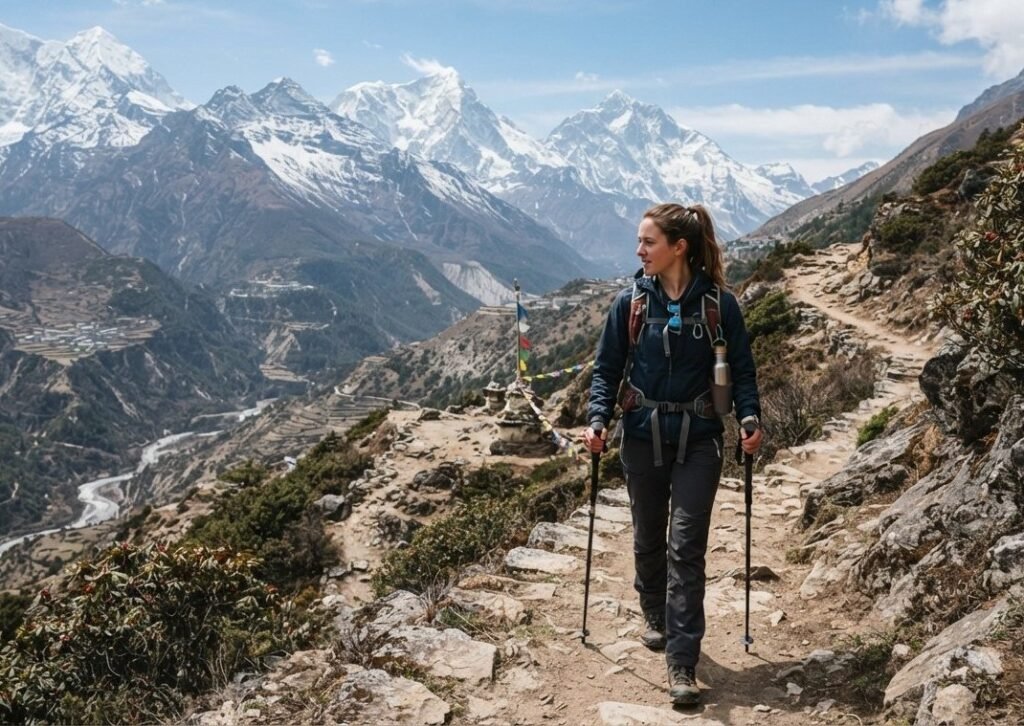
The Himalayas are easy to think of as a destination made for travellers: mountain roads winding through valleys, forests opening into quiet viewpoints, villages spread across slopes and long stretches where the landscape seems to take over completely.
But these mountains are not simply places to visit.
They are living landscapes. People farm here, run businesses, raise families, worship, travel to work and depend on local forests and water sources. Wildlife uses the same forests and valleys that visitors come to explore. Roads that seem like scenic routes to a traveller are also important connections for the people who live there.
Tourism has an important place in this picture. It creates opportunities for accommodation providers, restaurants, guides, drivers, artisans and many other local businesses. At the same time, every visitor brings some additional pressure through transport, waste, water use, energy consumption and activity in natural areas.
This is where responsible travel in the Himalayas becomes important.
It does not mean that you need to stop travelling, avoid every convenience or plan a completely different kind of holiday. It simply means becoming more conscious of the choices you make while you are there.
Carrying a reusable bottle, keeping a food wrapper in your bag until you find a suitable bin, staying on an established trail, giving wildlife enough space or asking before photographing someone may seem like very small actions. They are also some of the easiest ways for an ordinary traveller to behave more thoughtfully.
Responsible travel is ultimately less about travelling perfectly and more about understanding that you are a visitor in a place that continues to belong to people, wildlife and nature long after your trip is over.
What Does Responsible Travel in the Himalayas Actually Mean?
The phrase “responsible travel” can sometimes sound more complicated than it really is.
At its simplest, it means considering the effect your choices have on the place you are visiting and trying to avoid unnecessary harm.
That includes the obvious environmental choices, such as reducing waste and using water carefully. But it also extends to how you interact with people, how you behave around wildlife, where you spend your money, how you use mountain roads and even how you take photographs.
There is no completely impact-free holiday. Travelling requires transport, accommodation, food and other resources. The realistic goal is therefore not to eliminate every impact but to avoid the unnecessary ones.
For a traveller visiting the Himalayas, this might mean thinking about questions such as:
Do I really need another disposable bottle?
Where will this wrapper go after I finish eating?
Is this trail meant to be walked on, or am I creating a shortcut?
Am I getting too close to that animal for a photograph?
Would I be comfortable if someone behaved this way outside my own home?
These are simple questions, but they change the way you experience a destination.
The approach also aligns with the broader direction of tourism planning in Himachal Pradesh. The state tourism department identifies sustainable tourism as a way to support employment and business opportunities for residents while contributing to the protection of natural and cultural heritage.
For travellers, that larger idea becomes practical through everyday behaviour.
Carry Less Plastic Into the Mountains
One of the easiest places to begin is before you even leave your accommodation.
Think about the disposable items that tend to accumulate during a day of travelling. A bottle of water here, a plastic bag there, a packaged snack, a disposable cup or a collection of small wrappers can quickly become part of your travel routine.
You do not need to replace all of these things with expensive specialised products.
A reusable water bottle is a good start. So is keeping a cloth or reusable shopping bag in your daypack. If you already have a small container that can be reused for snacks, there is no reason to buy something new simply because it is marketed as an “eco” product.
The more useful habit is to pause before accepting something disposable.
If a shop offers a plastic bag for an item you can comfortably carry, you can decline it. If you already have a bottle, you do not necessarily need another one. If you are buying food for a short journey, consider whether the amount of packaging is avoidable.
Himachal Tourism’s visitor guidance specifically encourages travellers to bring reusable items and advises them to take non-biodegradable waste back with them or deposit it at appropriate collection points.
These are uncomplicated choices, but they can become part of your normal travel routine.
Never Leave Waste Behind
There is a simple rule that works almost anywhere in the mountains:
If you brought it with you, take responsibility for it afterward.
That applies whether you are sitting at a viewpoint, stopping beside a mountain road, walking through a forest or having a picnic outdoors.
Food wrappers and plastic bottles are obvious examples, but responsible travel also means remembering the smaller things that are easy to overlook: tissues, cigarette butts, disposable cups, snack packets and bits of packaging.
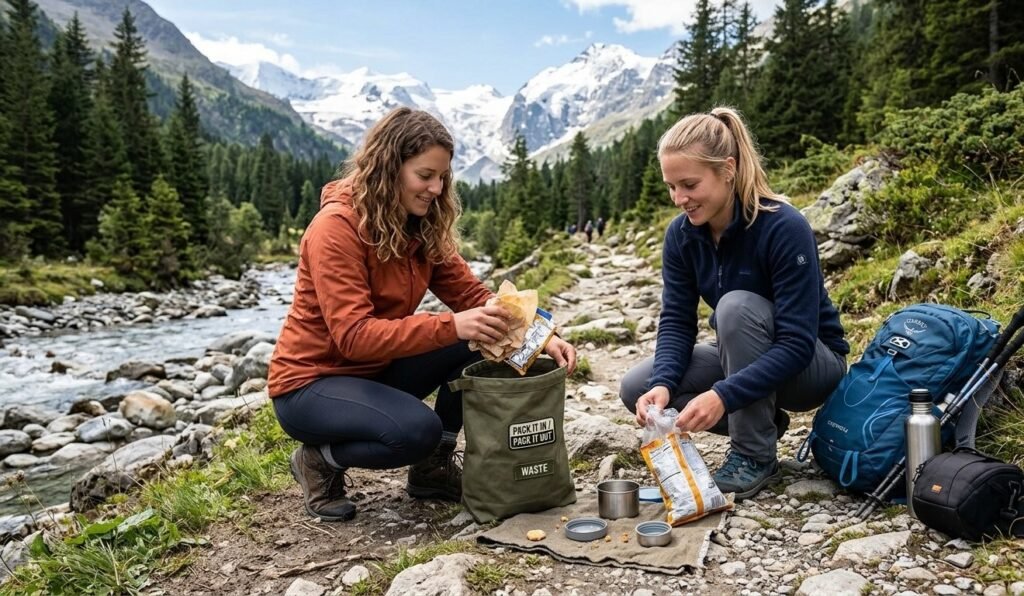
A remote-looking location does not mean that someone will automatically come along and clean it.
And leaving something beside a trail because it is “biodegradable” is not necessarily responsible either. Food scraps, tissues and other materials can still be inappropriate in natural areas and can affect wildlife or the experience of other visitors.
Himachal Tourism advises visitors not to leave non-biodegradable litter behind and specifically asks travellers to dispose of biodegradable and non-biodegradable waste properly while exploring the Himalayas.
The practical solution is often very simple: keep a small waste bag in your daypack.
If there is no suitable disposal point nearby, carry the waste with you until there is one.
A mountain landscape does not need to look untouched to be valuable, but it should not have to carry the evidence of every visitor who passed through it.
Respect Water in Mountain Destinations
Water is another resource that is easy to take for granted during a mountain holiday.
Streams, springs and rivers can make water seem like a permanent feature of the landscape. For people living in mountain communities, however, water is part of everyday life, and accommodation properties also need it for drinking, cleaning, kitchens and guest facilities.
That does not mean you need to count every minute of your shower.
It simply means avoiding waste when it serves no purpose.
Turn off the tap while brushing your teeth. Avoid leaving water running unnecessarily. If your accommodation offers a towel-reuse option, consider using it. Let the property know if you notice a leaking tap or toilet.
More importantly, do not treat natural streams and springs as convenient places to wash clothes, clean products or dispose of wastewater.
Himachal Tourism’s responsible-travel guidance asks visitors to prevent water pollution and specifically advises against washing clothes in springs or streams or discharging soapy water into water sources.
There is also no reason to assume that a clear mountain stream is automatically safe to drink. Follow local advice and use suitable treatment where necessary.
Being careful with water does not have to make a holiday less comfortable. It simply means using what you need rather than wasting what you do not.
Stay on Established Trails and Respect the Landscape
Walking through the mountains creates a particular temptation: the path ahead looks interesting, but the slope beside it seems like a quicker or more scenic route.
Sometimes that extra step seems harmless.
Repeated thousands of times, however, the behaviour is no longer quite so insignificant.
When you are walking through forests, meadows, viewpoints or protected landscapes, staying on established trails is one of the simplest ways to reduce unnecessary disturbance. Avoid creating shortcuts simply because they look faster. Do not climb over barriers to reach a better viewpoint. And do not enter areas marked as restricted.
This is especially important in protected areas, where visitor movement may be subject to specific rules.
Himachal Pradesh currently has a network of national parks, wildlife sanctuaries and conservation reserves managed for the protection of the state’s wildlife and ecological areas. The Forest Department’s current protected-area information lists five national parks, 26 wildlife sanctuaries and three conservation reserves.
The important point is not to memorise the names or rules of every protected area.
It is to recognise that a beautiful landscape may also be a sensitive one.
A trail is more than a line on the ground. It is often the route designed to allow visitors to experience an area while limiting unnecessary disturbance around it.
So when a marked path exists, staying on it is usually the better choice.
Enjoy Wildlife Without Disturbing It
Wildlife encounters can become some of the most memorable parts of mountain travel, particularly when they happen unexpectedly.
But a good wildlife experience is not measured by how close you managed to get.
If you see an animal while travelling, give it space. Watch quietly and allow it to continue whatever it was doing before you arrived.
Do not feed it to encourage it to stay. Do not chase it when it moves away. Do not call loudly to get its attention. And never attempt to touch a wild animal for a photograph.
This becomes especially important when a traveller has a camera or phone in hand. The desire to get a closer image can easily turn a respectful observation into an intrusive encounter.
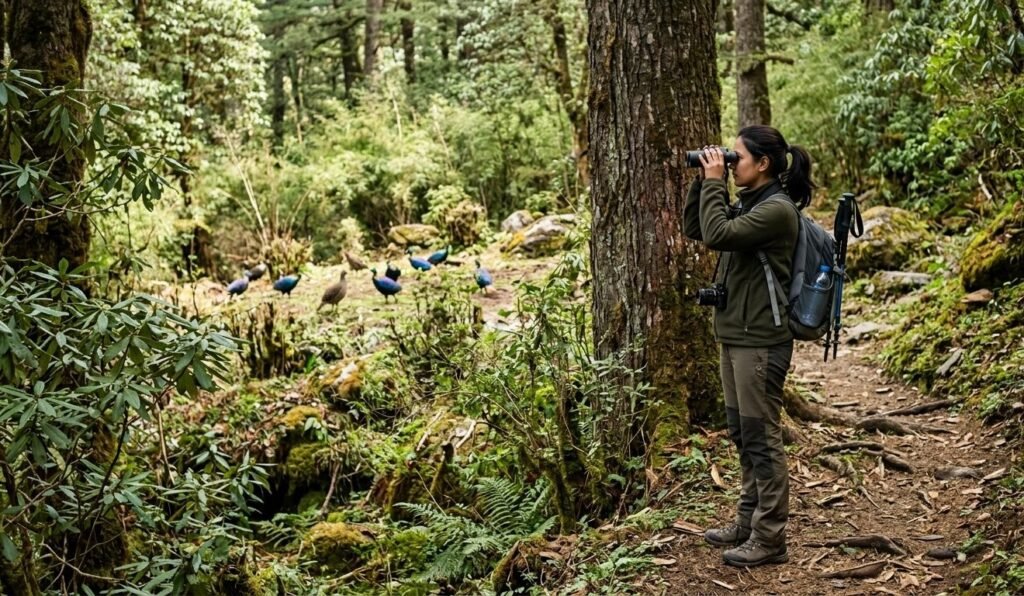
If the animal is moving away from you, let it go.
A photograph taken from farther away is almost always preferable to disturbing an animal simply to fill the frame.
Himachal Tourism’s visitor guidance tells tourists not to touch or harass animals and to follow designated trails, while its broader do’s and don’ts also advise visitors not to leave food for wild animals or engage with them.
Protected areas may also have their own rules, so instructions from forest staff and local authorities should take priority.
Responsible wildlife tourism is ultimately about observation rather than interaction.
Take Photographs Without Crossing Boundaries
Travel photography has changed the way people experience destinations.
A viewpoint is no longer simply something to look at. It can also become the setting for a photograph, a reel or a social media post.
There is nothing wrong with photographing your trip. The important question is what you are willing to do to get the photograph.
A better picture is not worth entering private property, climbing over a safety barrier or disturbing wildlife.
The same consideration applies to people.
If you want to photograph a shopkeeper, artisan, local resident or someone going about their daily life, ask first. A few seconds of consideration can make the interaction much more respectful.
The same applies around temples, monasteries, religious ceremonies and culturally significant spaces. Photography rules can vary, and some places may require permission.
Himachal Tourism advises visitors that certain buildings and monuments may require permission for photography or filming.
There is also a safety element to responsible photography.
Do not stand on unstable rocks or cliff edges because a particular angle looks good through your camera. Do not stop a vehicle in the middle of a narrow mountain road simply because the valley suddenly looks beautiful.
Himachal Tourism specifically warns visitors against standing at cliff edges or on boulders near riverbanks for photographs.
The best travel photographs should record an experience, not create a new problem.
Respect Himalayan Communities and Local Culture
It is easy to forget that many places we visit in the mountains are someone’s everyday surroundings.
A quiet village is someone’s home. A small shop is someone’s livelihood. A narrow road may be the route a resident uses every day. A courtyard that looks photogenic may be private property.
That awareness changes how you behave.
When walking through a village, avoid entering private spaces simply because a gate is open. Ask before photographing people. Keep your voice down around homes. If you visit a religious or culturally important place, follow the local expectations rather than assuming that tourist behaviour is acceptable everywhere.
It can also be useful to learn a few simple words or greetings when visiting a region. You do not need to become fluent in a local language. The effort itself can make everyday interactions feel more personal and respectful.
Understanding the region before travelling can help too. Reading about Himachali Culture in Dalhousie, for example, can provide context that is useful when experiencing the area as a visitor.
Most importantly, remember that local communities are not part of the scenery.
Responsible tourism includes the way you speak to people, photograph them, negotiate with them and move through their neighbourhoods.
Support Local Businesses Where Possible
One of the most direct ways tourism can contribute to a destination is through local spending.
Where you have a genuine choice, consider eating at locally owned establishments, purchasing locally made products or using services provided by people who live and work in the area.
This could be a meal at a local restaurant, a product purchased directly from an artisan or a local guide who knows the surrounding area.
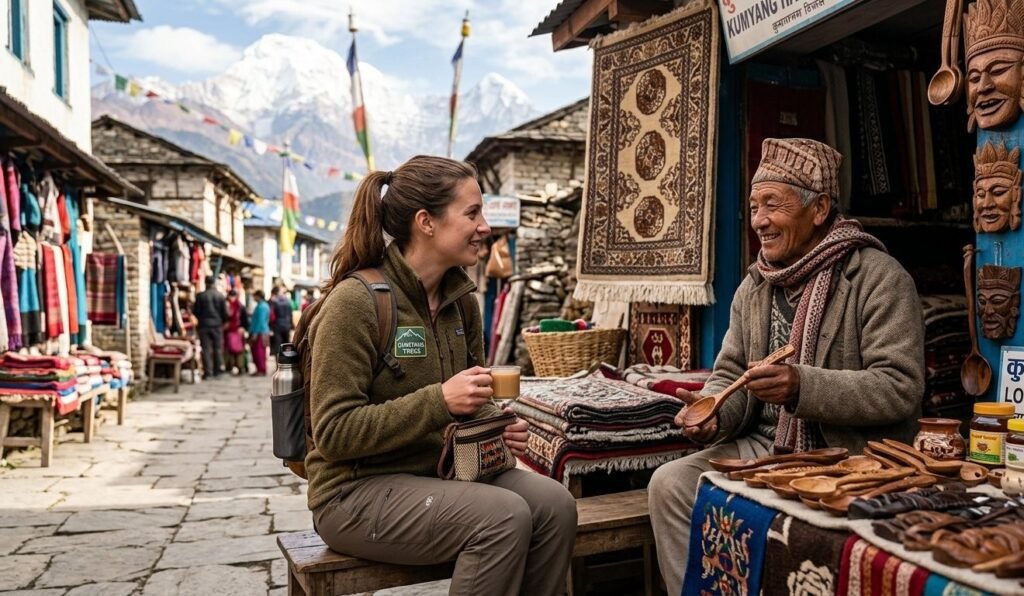
It does not mean that every local business is automatically sustainable. Nor does responsible travel require you to buy something simply because it is labelled “local.”
The point is to make thoughtful choices.
There is also a difference between bargaining fairly and trying to push every small purchase to the lowest possible price. For many small businesses, the amount may be modest to a traveller but meaningful to the person providing the product or service.
You can also look beyond shopping.
Hiring local services, eating local food and choosing locally owned experiences can all help keep some tourism spending within the destination.
Himachal Pradesh’s tourism policy explicitly connects sustainable tourism with benefits for host communities and the preservation of natural and cultural heritage.
That makes the local side of responsible travel just as important as the environmental side.
Travel More Thoughtfully on Mountain Roads
Some of the most memorable moments of a Himalayan journey happen on the road.
A bend opens up to a valley. Clouds move across a distant ridge. A small village appears below.
The temptation to stop immediately for a photograph is understandable.
But mountain roads are working roads first and scenic routes second.
Other vehicles, buses, taxis, pedestrians and local residents may need to use the same stretch of road. A vehicle stopped in the wrong place can create inconvenience or even a safety risk.
Responsible mountain travel therefore includes some basic road courtesy.
Avoid unnecessary honking. Do not throw anything from a vehicle window. Do not block narrow roads while taking photographs. Use appropriate parking areas where available, and follow local traffic restrictions.
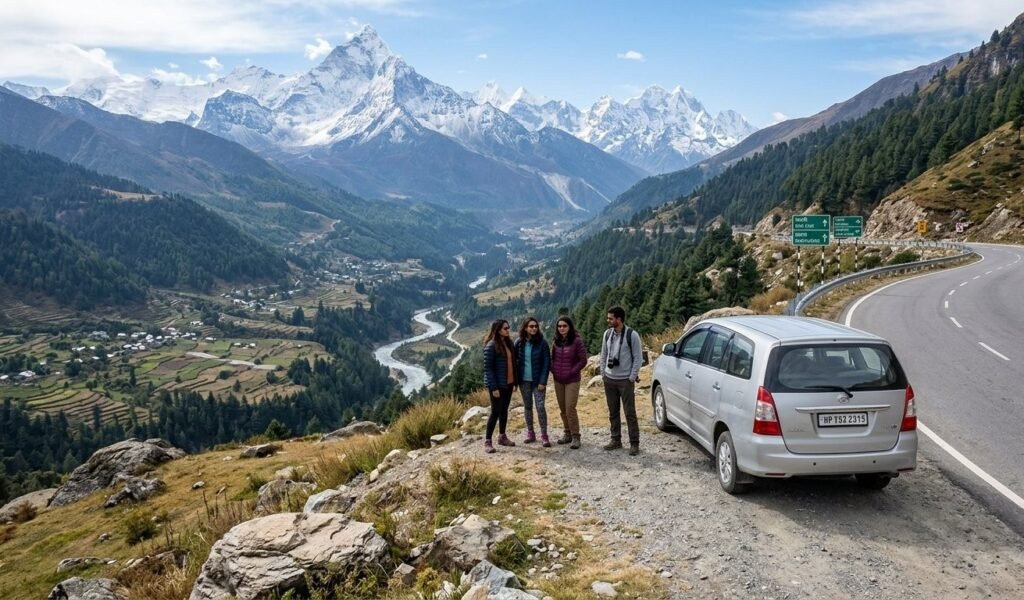
Most importantly, do not rush because you are trying to fit one more stop into the itinerary.
Weather and road conditions can also change quickly in mountain regions. Before travelling, check current official advisories where relevant and allow enough time for the journey.
Responsible travel on mountain roads is often less about doing something special and more about giving other people enough space to get on with their journey too.
Be Considerate About Noise
One of the pleasures of being in the mountains is the chance to experience a quieter environment.
That experience can disappear quickly when visitors bring city-level noise with them.
A loud speaker outside a room, shouting at a viewpoint, unnecessary vehicle horns or a late-night party may seem harmless to the people creating the noise. For someone staying nearby—or for residents living close to the property—it can be very different.
The same consideration applies in natural areas.
You do not need to whisper throughout your holiday. You simply need to think about the surroundings before turning up the volume.
Keep music at a reasonable level. Avoid shouting in forests or around wildlife areas. Be especially considerate near homes and accommodation shared with other guests.
Himachal Tourism’s visitor guidance specifically advises travellers not to create unnecessary noise.
Sometimes responsible travel means recognising that the quiet you came to the mountains to enjoy is also something other people came here for.
Choose Accommodation Thoughtfully
The accommodation you choose becomes part of your experience of a destination, but it is also worth looking beyond photographs and location.
A property surrounded by trees is not automatically an environmentally responsible property. Likewise, the word “eco” in a description does not tell you everything about how a place actually operates.
Instead, look at what the property communicates about its everyday practices.
Does it encourage reasonable water use? Does it provide clear waste-disposal guidance? Does it appear connected with the surrounding community? Does it avoid unnecessary disposable items? Does it ask guests to be considerate about noise and local surroundings?
These questions do not require a property to have an impressive sustainability label.
They simply encourage travellers to pay attention.
Himachal Tourism also provides visitor guidance around accommodation and recommends registered hotels, guest houses and homestays as part of its travel advice.
Once you arrive, your own behaviour remains just as important as the property’s practices.
Turn off what you do not need. Use water sensibly. Follow the property’s instructions. Avoid unnecessary waste. And remember that the people staying in the rooms around you may have come to the mountains for a quiet experience too.
Leave No Trace: A Simple Rule for Mountain Travel
You do not need to be an experienced trekker or camper to understand the idea behind leave no trace travel.
The principle is simply to minimise the unnecessary evidence and impact of your visit.
The official Leave No Trace framework includes seven principles covering preparation, travelling on durable surfaces, proper waste disposal, leaving natural objects undisturbed, minimising campfire impacts, respecting wildlife and considering other visitors.
For an ordinary traveller, this can be reduced to a few straightforward habits.
Take your waste with you.
Stay on established paths.
Leave flowers, rocks and other natural objects where you found them.
Do not feed wildlife.
Avoid damaging vegetation.
Follow local rules.
Keep noise at a reasonable level.
And if you are somewhere where fires are permitted, follow the specific local requirements rather than assuming that a campfire is acceptable simply because you are outdoors.
The beauty of the principle is that it applies to almost every type of Himalayan trip.
You can follow it on a short walk, during a road trip, while visiting a village or while spending a few days at a mountain accommodation.
It is less a strict set of travel rules and more a way of thinking:
Enjoy the place without unnecessarily changing it.
What Responsible Travel Does Not Mean
It is easy for conversations about sustainable travel to become unrealistic.
You may read advice suggesting that responsible travellers should eliminate every vehicle journey, buy specialised products, avoid popular destinations and make dozens of carefully calculated choices before leaving home.
That can make responsible travel feel like a burden.
It does not have to be.
Responsible travel does not mean giving up travel.
It does not mean avoiding every vehicle.
It does not mean spending a large amount of money on specialised “eco-friendly” products.
It does not mean staying only at properties marketed as sustainable.
And it certainly does not mean being perfect.
A traveller may have to take a private vehicle because of the route they are travelling. Another person may be travelling with young children and have different practical needs. Someone else may be visiting the Himalayas for the first time and simply not know the local expectations yet.
What matters is what you can reasonably do.
If you cannot change your entire mode of transport, you can still avoid littering.
If you cannot find a property with every environmental feature you would ideally like, you can still conserve water and reduce waste.
If you cannot avoid packaged food completely, you can still take the packaging with you afterward.
Responsible tourism becomes much more realistic when it is treated as a habit of making better choices rather than a demand for perfection.
A Practical Responsible Traveller Checklist
A little preparation before leaving home can make responsible choices much easier once you arrive.
Before the trip
Research the destination and check whether there are specific local or protected-area rules you need to know. Check current weather and road conditions, especially if your journey involves mountain roads.
Pack a reusable water bottle, a reusable shopping bag and a small bag for carrying your personal waste.
If you are visiting a protected area, check the current visitor requirements rather than relying on an old social media post or outdated travel blog.
During the journey
Avoid unnecessary single-use items. Keep your own waste with you. Follow traffic and parking rules, and avoid unnecessary honking.
If you stop for photographs, make sure you are not blocking a road or putting yourself in an unsafe position.
And give yourself enough time to travel without constantly rushing from one place to the next.
In nature
Stay on established trails and avoid damaging vegetation.
Do not remove flowers, rocks or other natural objects.
Keep your distance from wildlife and never feed animals.
If there is no bin nearby, take your waste with you until you find a suitable disposal point.
Around local communities
Ask before photographing people.
Respect private property and local customs.
Keep noise reasonable near homes and villages.
Where appropriate, support local businesses and services.
At your accommodation
Use water thoughtfully.
Avoid unnecessary waste.
Turn off lights or equipment when they are not needed.
Follow the property’s guidelines and be considerate of other guests.
None of these actions is difficult on its own. The difference comes from making them part of the way you travel.
Responsible Travel in Himachal Pradesh
The principles of responsible travel apply across the Himalayas, but they become particularly relevant when travelling through Himachal Pradesh.
The state includes busy tourist towns, rural communities, forests, protected areas, agricultural landscapes and mountain roads. A journey can pass through several very different environments within a relatively short distance.
That means there is no single behaviour that defines responsible tourism.
In a protected forest, following designated trails may be the most important thing you can do. In a village, respecting privacy and local customs may matter more. On a mountain road, responsible behaviour may simply mean not stopping where you obstruct traffic.
Himachal Pradesh’s tourism department has explicitly included environmental protection, local customs, accommodation and responsible tourism within its visitor guidance.
The state’s wider tourism policy also identifies sustainable tourism as a way to protect natural and cultural heritage while supporting local communities.
For travellers, this provides a useful reminder: responsible tourism is not a separate type of holiday.
It is a way of experiencing an ordinary holiday more thoughtfully.
Before visiting a protected area or undertaking an activity with specific regulations, it is sensible to check the latest official information rather than relying solely on general travel advice. The Himachal Pradesh Forest Department’s protected-area information is a useful starting point for understanding the state’s protected-area network.
Similarly, theHimachal Tourism travel guidance provides practical advice on environmental protection, local customs, accommodation and visitor behaviour.
How EVA Cabins Fits Into a More Thoughtful Mountain Stay
Where you stay can influence how you experience the mountains.
A trip does not always have to revolve around moving from one attraction to another. Sometimes, a more relaxed stay gives you the opportunity to spend time with the surroundings, enjoy a slower morning and experience the destination without constantly watching the clock.

This is where a cabin or homestay experience can naturally fit into a more considered approach to mountain travel.
EVA Cabins offers cabin and homestay experiences connected with the Himalayan setting around Dalhousie, Himachal Pradesh. The purpose of the stay is not to suggest that being surrounded by nature automatically makes a holiday sustainable. Rather, it provides a comfortable base from which travellers can experience the mountains at a more unhurried pace.
The same idea applies regardless of where you choose to stay.
A responsible guest uses resources thoughtfully, avoids unnecessary waste, respects other guests and considers the community and environment around the property.
You can enjoy a comfortable stay while still being mindful of your footprint.
In fact, those two things do not need to be opposites.
A thoughtful mountain stay can simply mean having enough time to appreciate where you are instead of feeling that you have to constantly consume the next experience.
Small Habits Can Change the Way We Travel
Responsible tourism rarely comes down to one big gesture.
It is built from small decisions made throughout a trip.
It is the decision to carry the bottle you already have instead of buying another disposable one.
It is putting a snack wrapper back into your bag because there is no bin nearby.
It is taking the established trail instead of cutting across a meadow.
It is watching wildlife from a distance instead of trying to get closer.
It is asking before photographing someone.
It is choosing a local restaurant when you have the opportunity.
It is turning the music down when you realise that the people around you came to the mountains for quiet.
None of these actions changes the basic purpose of a holiday.
You can still explore. You can still take photographs. You can still enjoy local food, travel along mountain roads, spend time outdoors and stay somewhere comfortable.
The difference is that you become a little more aware of the place around you.
That awareness is at the heart of responsible travel in the Himalayas.
The mountains are not simply scenery waiting for visitors. They are ecosystems, communities, workplaces, homes and habitats.
Once you start seeing them that way, many responsible choices become instinctive rather than difficult.
Travel With More Awareness, Not More Rules
Travelling responsibly in the Himalayas does not require a perfect itinerary or a completely different kind of holiday.
It starts with paying attention.
Pay attention to what you carry into the mountains and what you leave behind. Pay attention to how much water you use. Pay attention to where you walk. Give wildlife the space it needs. Ask before taking photographs. Respect private spaces and local customs. Support local businesses where you can. Be patient on mountain roads. Keep the noise down when the surroundings call for quiet.
None of these habits will make travel completely impact-free.
That is not the goal.
The goal is to avoid the unnecessary impact that comes from simply not thinking about our behaviour.
The Himalayas will continue to attract people looking for nature, quiet, adventure, culture and time away from everyday routines. There is nothing wrong with wanting those experiences. The important thing is to remember that the places we visit continue to exist after we leave.
A responsible traveller does not need to leave a destination untouched.
They simply try to leave it without unnecessary harm.
And perhaps that is the most practical way to approach sustainable travel in the Himalayas: not as a long list of restrictions, but as a little more awareness in every choice we make.
Frequently Asked Questions
1. What is responsible travel in the Himalayas?
Responsible travel means enjoying Himalayan destinations while considering your impact on nature, local communities and other visitors. It includes reducing unnecessary waste, using resources thoughtfully, respecting wildlife and following local rules.
2. How can tourists reduce waste while travelling in the Himalayas?
Carry reusable items such as a water bottle and shopping bag, avoid unnecessary single-use products and keep your personal waste with you until you find an appropriate disposal point.
3. How can I respect local communities when visiting Himalayan destinations?
Treat villages as living communities rather than tourist attractions. Ask before photographing people, respect private property and local customs, keep noise reasonable and support local businesses where appropriate.
4. How should I behave around wildlife in the Himalayas?
Maintain a safe distance, avoid feeding or touching animals and never chase wildlife for photographs. Follow instructions from forest staff and protected-area authorities.
5. How can I travel sustainably in Himachal Pradesh?
Focus on practical choices such as reducing waste, conserving water, respecting local communities, staying on established trails and following environmental and visitor guidelines.
6. What does Leave No Trace mean for mountain travellers?
It means minimising unnecessary impact while visiting natural areas. This includes taking waste with you, staying on established paths, leaving natural objects where they are, respecting wildlife and considering other visitors.
7. How can I reduce my environmental impact while staying in the mountains?
Use water and energy thoughtfully, avoid unnecessary disposable products, follow accommodation guidelines and avoid activities that damage the surrounding landscape.
8. Is responsible travel expensive?
Not necessarily. Many responsible choices cost nothing. Avoiding litter, respecting wildlife, reducing unnecessary water use, staying on established trails and being considerate toward local communities are primarily behavioural choices.