
Mountain Holidays vs Beach Holidays: Which Escape Is Right for You?
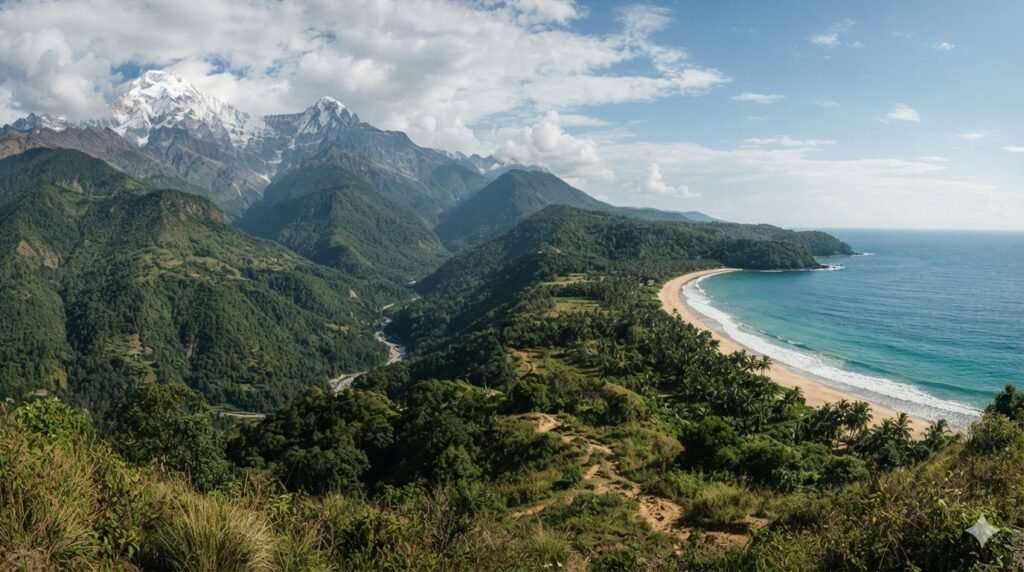
There are two very different ways to picture your next escape.
One involves winding mountain roads, cooler air, forested slopes, walking trails and evenings spent somewhere quiet. The other brings warm weather, open coastlines, swimming, water activities, seafood lunches and long afternoons beside the sea.
Neither is automatically the better holiday.
The real question behind mountain holidays vs beach holidays is what kind of experience you want from your time away. Do you want to be active and outdoors, or relaxed beside the water? Do you prefer cool evenings and changing landscapes, or sunshine and a slower coastal rhythm? Are you travelling as a couple, with children, alone, or with friends?
Your answer may also depend on the season, how far you want to travel, your budget and how much planning you enjoy.
For travelers in India, the choice can be especially interesting. A mountain escape might mean heading into Himachal Pradesh for a few days among forests and highland landscapes, while a beach vacation could take you toward Goa, Kerala, the Andaman Islands or another coastal destination.
So rather than asking which is universally better, it makes more sense to ask: which one fits the holiday you want right now?
Mountain Holidays vs Beach Holidays: What Is the Real Difference?
At a basic level, mountain and beach holidays offer two contrasting environments.
Mountain holidays are shaped by elevation, forests, valleys, winding roads and changing terrain. The experience often involves more movement between viewpoints, trails, villages and natural landscapes. Even when the main goal is relaxation, the surroundings encourage walking, exploring and spending time outdoors.
Beach holidays are shaped by the coastline. Swimming, water sports, beach walks, boat trips and waterfront dining can become part of the day without requiring much travel between activities.
The climate also creates a noticeable difference. Mountain destinations can offer cooler conditions, particularly outside the warmer months, while coastal destinations are generally associated with warmth and humidity, although this varies considerably by region and season.
Accommodation can feel different too. A mountain stay might mean a cabin, homestay, lodge or hillside resort, where the setting is part of the experience. A beach vacation may revolve around a resort, villa, hotel or guesthouse close to the coast.
Neither approach is inherently more relaxing, adventurous or romantic. They simply create different kinds of holidays.
Choose Mountains or Beaches Based on Your Travel Personality
The easiest way to choose between the two is to think less about destinations and more about yourself.
What do you naturally look forward to when you travel?
You May Prefer a Mountain Holiday If…
Mountains may suit you if you enjoy cooler weather, natural landscapes and days that involve some exploration.
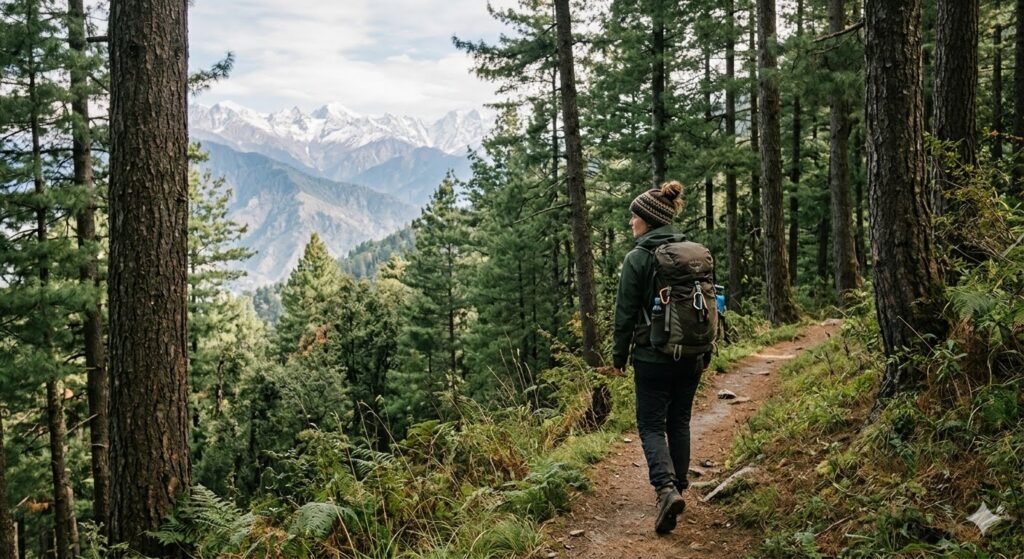
You might prefer:
- Forest walks rather than swimming
- Scenic drives rather than coastal road trips
- Hiking and trails rather than water sports
- Quiet evenings rather than nightlife
- Photography focused on landscapes and changing weather
- Cozy accommodation where you can spend time indoors as well as outside
- A slower itinerary with room for spontaneous stops
- Nature and local surroundings rather than a resort-centered holiday
Mountain travel can also appeal to people who enjoy having variety within a relatively compact landscape. A single day can involve a village, a forest road, a viewpoint, a local meal and an easy walk.
For some travelers, that sense of movement is part of the pleasure.
You May Prefer a Beach Holiday If…
A beach vacation may be the better match if you enjoy warm weather, water and a more open, leisure-oriented environment.
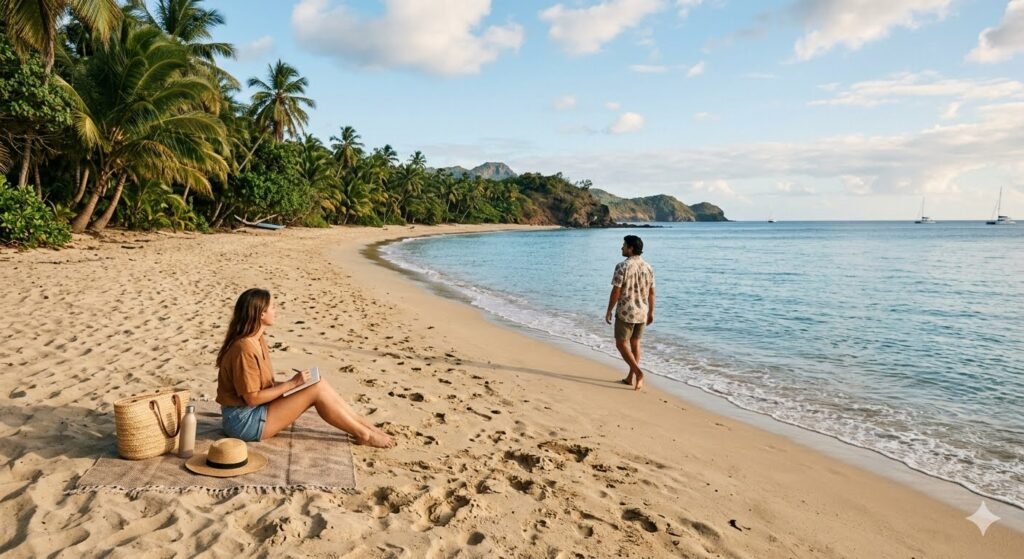
You might prefer:
- Swimming and water activities
- Sunbathing
- Beach walks
- Boat trips
- Snorkeling or surfing where available
- Seafood and coastal dining
- Waterfront accommodation
- Social evenings and seaside cafés
- Spending several hours in one place without needing a packed itinerary
Beach holidays can be wonderfully simple. You may not need to decide what to do every few hours. A morning swim, lunch by the water and an afternoon reading beside the sea can be enough.
That simplicity is a major part of their appeal.
Mountain Holidays vs Beach Holidays — Complete Comparison
There is no single winner across every category. The better option depends heavily on destination and season.
| Factor | Mountain Holidays | Beach Holidays |
| Climate | Often cooler, but varies greatly with elevation and season | Usually warmer, though coastal climates vary by region |
| Scenery | Forests, valleys, peaks, villages and changing terrain | Coastlines, beaches, waves, islands and marine landscapes |
| Activities | Hiking, trekking, walking, road trips and nature exploration | Swimming, kayaking, snorkeling, surfing and boat trips |
| Adventure | Strong choice for land-based adventure | Strong choice for water-based adventure |
| Relaxation | Quiet surroundings, walks and slower days | Swimming, beach time and waterfront leisure |
| Couples | Privacy, scenic settings and cozy stays | Beaches, dining and seaside experiences |
| Families | Good for families who enjoy nature and exploration | Good for families who enjoy water and beach activities |
| Solo Travel | Walking, photography and independent exploration | Beach time, social spaces and water activities |
| Photography | Forests, mountains, clouds, roads and landscapes | Coastlines, waves, boats and reflections |
| Food | Local mountain cuisine and homestyle meals | Coastal cuisine, seafood and beachside dining |
| Accommodation | Cabins, homestays, lodges and resorts | Resorts, hotels, villas and guesthouses |
| Seasonal Appeal | Varies significantly with elevation | Varies significantly by coastline and weather |
| Accessibility | Some destinations involve winding or slower mountain roads | Many coastal destinations can be relatively straightforward to reach |
| Atmosphere | Often quieter and nature-oriented | Often relaxed, social and coastal |
| Budget | Depends heavily on transport, accommodation and activities | Depends heavily on destination and accommodation style |
The important word throughout this comparison is depends.
A luxury mountain resort can cost considerably more than a simple beach guesthouse. A remote beach destination can require more travel than a nearby hill station. A family mountain holiday can be easier than a beach vacation for one family and much harder for another.
The destination matters as much as the category.
Which Is More Relaxing — Mountains or Beaches?
Relaxation does not look the same for every traveler.
For one person, relaxing means sitting somewhere quiet with a book while clouds move across the hills. For another, it means swimming in the sea before breakfast and spending the afternoon beside the water.
Why Mountains Can Feel Relaxing
A mountain holiday naturally lends itself to slower days.
You can wake without a long list of activities, take a short forest walk, stop for tea, return to your stay and spend the afternoon doing very little.
The cooler environment can also make indoor time appealing. Reading, talking, listening to music or simply looking out at the surrounding landscape can become part of the holiday rather than something you do between activities.
Mountain destinations also offer opportunities to build an itinerary around small experiences rather than major attractions.
Why Beaches Can Feel Relaxing
Beach holidays have their own version of unstructured time.
A swim can become the morning activity. A long lunch can stretch into the afternoon. A beach walk may replace sightseeing, while the sound of the sea provides a natural backdrop to the day.
For travelers who associate holidays with warmth, water and outdoor leisure, a beach vacation may feel far more restorative than a cool-weather mountain escape.
The best choice is therefore not about which landscape is inherently more relaxing.
It is about what you find relaxing.
Mountain Holidays vs Beach Holidays for Couples
For couples, the choice often comes down to the atmosphere they want.
A mountain getaway can create a sense of privacy and togetherness. A cabin, lodge or small hillside stay can provide a comfortable base for days spent walking, driving through scenic areas or simply spending time together.
The setting can also encourage couples to slow down. Instead of moving constantly between attractions, a mountain holiday can be built around shared meals, walks, conversations and quiet evenings.
A beach holiday creates a different kind of romance.
There may be long walks beside the water, swimming together, sunset dinners, boat trips and relaxed afternoons near the coast. Couples who enjoy warm weather and water-based activities may find this environment more naturally suited to them.
For a honeymoon, both can work beautifully.
A couple who wants privacy, cooler surroundings and landscape-driven experiences may lean toward the mountains.
A couple who wants warm weather, swimming and seaside leisure may prefer the beach.
For anniversaries and shorter romantic breaks, the same principle applies: choose the atmosphere that matches how you want to spend time together.
Mountain Holidays vs Beach Holidays for Families
Families need to consider more than scenery.
Children’s ages, interests, weather preferences and travel tolerance can make a significant difference.
Mountain holidays can work especially well for families who enjoy walking, wildlife, photography, scenic drives and outdoor exploration. Older children and teenagers may appreciate the opportunity to hike or explore rather than spend the entire trip around a resort.
Younger children may require more thought around terrain, weather and transportation. Mountain roads can be winding, and some outdoor activities may not be suitable for every age group.
Beach holidays can be appealing because the activities are often easy to understand: swimming, building sandcastles, walking along the coast and playing in the water.
However, beaches also require appropriate supervision around water, tides and weather conditions. Conditions vary significantly from one destination to another.
Food and accommodation matter too. Families should consider whether their chosen stay offers the space, meal options and practical arrangements they need.
For families, the question isn’t simply mountains or beaches?
It is:
What will everyone in the family actually enjoy doing for several days?
Which Is Better for Adventure?
If adventure is high on your travel list, both landscapes offer plenty of possibilities.
The difference is mostly in the type of adventure.
Mountain Adventures
Mountain travel is naturally suited to land-based exploration.
Depending on the destination, activities may include:
- Hiking
- Trekking
- Nature trails
- Mountain biking
- Scenic road trips
- Village walks
- Outdoor exploration
Himachal Pradesh, for example, offers a wide range of mountain landscapes and outdoor experiences. The official tourism information for the state highlights activities including trekking, paragliding and skiing across different destinations.
But adventure does not always have to mean something physically demanding.
Driving along a mountain road, walking through a forest or exploring an unfamiliar village can be adventurous in a quieter sense.
Beach Adventures
Beach destinations shift the focus toward the water.
Depending on the location and local operators, you may find:
- Swimming
- Kayaking
- Snorkeling
- Surfing
- Boat trips
- Paddleboarding
- Other water sports
Again, availability depends on the destination, season and local conditions.
If you prefer terrain, elevation and exploration, mountains may have the advantage.
If you prefer water, movement and marine activities, the beach may be the more natural choice.
Mountains vs Beaches for a Slow Travel Experience
Slow travel is less about choosing a particular landscape and more about choosing how you travel.
It means resisting the urge to fill every day with attractions.
Instead of checking off ten places, you might spend more time in one area. You walk rather than constantly drive. You eat locally. You allow an afternoon to remain unplanned.
Mountains can be particularly well suited to this approach.
A mountain stay can become a base for slow mornings, short walks, local meals, reading, conversations and simply observing the landscape. You do not necessarily need to turn every day into a sightseeing circuit.
But beaches can be equally good for slow travel.
In fact, many beach holidays naturally encourage it. A traveler may spend several hours by the water without feeling that they are wasting time.
The difference is not mountains versus beaches.
It is rushed travel versus intentional travel.
If you want to experience a destination rather than simply collect photographs of it, either landscape can work.
Which Is Better for Photography?
Both mountains and beaches offer strong photographic opportunities, but the visual language is completely different.
Mountain Photography
Mountains provide layers.
You can photograph:
- Forests
- Valleys
- Mountain roads
- Villages
- Clouds
- Changing weather
- Wildlife
- Wide landscapes
- Architectural details
The scenery can change dramatically during a single drive. A clear view can become misty, a forest can open into a valley and a road can become part of the composition.
That variety makes mountain destinations particularly rewarding for travelers who enjoy landscape photography.
Beach Photography
Beach photography is often more open and minimalist.
You can work with:
- Coastlines
- Waves
- Water reflections
- Boats
- Coastal villages
- Marine landscapes
- People interacting with the sea
There is also a different relationship between foreground and horizon.
A mountain landscape gives you depth through slopes, forests and valleys. A beach often gives you simplicity through sand, water and sky.
If you enjoy complex landscapes and changing terrain, choose the mountains.
If you prefer open horizons, water and coastal compositions, choose the beach.
Mountains vs Beaches in Different Seasons
Seasonality can completely change the character of a holiday.
Spring
Mountain destinations can become attractive as landscapes transition toward warmer conditions and vegetation changes.
Beach destinations may also be appealing before the hottest or busiest periods in some regions.
The right choice depends on the destination rather than the season name alone.
Summer
For travelers looking to escape intense heat, some mountain destinations can be appealing, particularly those at higher elevations.
Beach destinations can also be popular during summer, especially for travelers who actively want warm weather and swimming.
This is one of the clearest examples of personal preference shaping the decision.
Monsoon
Rain can dramatically affect both mountain and coastal travel.
Mountain roads and outdoor plans may be affected by heavy rainfall in some areas, while coastal destinations can also experience rough seas, storms or reduced access to water activities.
Always check current local conditions before travelling.
Autumn
Autumn can be an excellent period for certain mountain destinations, particularly for travelers who enjoy changing landscapes and cooler conditions.
Some beach destinations may also become attractive as peak summer conditions ease.
Winter
Mountain holidays can offer a completely different experience in winter, depending on altitude and snowfall.
Beach destinations, meanwhile, may become particularly attractive to travelers looking for warmth.
This is where the mountain-versus-beach decision can become almost philosophical: do you want to embrace winter or escape it?
There is no universal answer.
Which Is Better for a Long Weekend?
A long weekend changes the calculation.
When you only have three or four days, travel time matters more.
A mountain destination that requires several hours of road travel may leave less time for the actual holiday. The same applies to a beach destination that requires multiple connections.
For a short break, look for a destination that allows you to spend most of your time experiencing the place rather than reaching it.
Mountains can work particularly well when the journey itself is part of the experience. Scenic roads, changing landscapes and interesting stops can turn transportation into part of the holiday.
Beach trips can be equally effective when the coast is easily accessible and you can reach your accommodation without spending most of your weekend in transit.
For a long weekend, ask yourself:
- How long will the journey take?
- How much time will I realistically have at the destination?
- Do I need a packed itinerary?
- What activities are available close to my stay?
- Will the journey feel like part of the experience or simply transportation?
Those questions are more useful than simply asking whether mountains or beaches are better.
Which Works Better for a Longer Holiday?
A longer holiday gives both landscapes more room to shine.
For a 3–4 day trip, convenience and proximity are particularly important.
For a 5–7 day holiday, you have more freedom to mix relaxation with exploration.
A mountain holiday could combine a few outdoor activities with unplanned days, while a beach vacation might alternate between water activities and completely free afternoons.
For an even longer trip, the variety of the destination becomes more important.
Mountain regions can offer changing landscapes, different elevations, cultural experiences and road-trip possibilities. Beach regions can offer multiple coastal areas, islands, water activities and local communities.
Your travel style also matters.
If you enjoy moving around, a longer mountain road trip may suit you.
If you prefer staying in one place, a beach vacation may allow you to settle into a coastal rhythm.
Mountain Accommodation vs Beach Accommodation
Accommodation is not simply where you sleep.
It can influence how the entire holiday feels.
Mountain Stays
Mountain accommodation can include:
- Cabins
- Homestays
- Lodges
- Guest stays
- Resorts
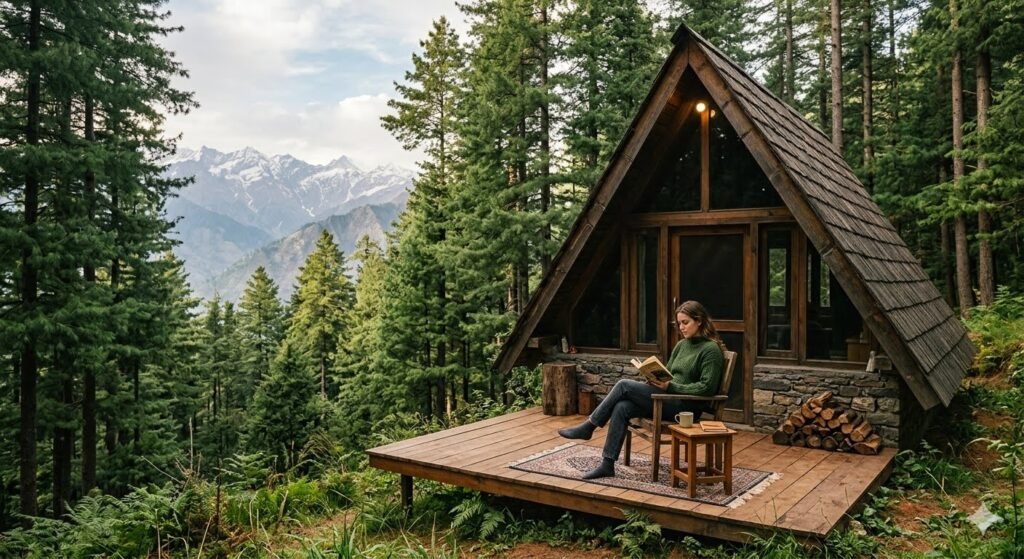
A cabin stay in the mountains, for example, can make the setting part of the experience. The accommodation may encourage travelers to spend more time observing the landscape, enjoying quiet mornings or returning early after outdoor activities.
Homestays can provide another kind of experience, particularly for travelers interested in local surroundings and hospitality.
Beach Stays
Beach accommodation ranges from large resorts and hotels to villas, homestays and guesthouses.
For some travelers, proximity to the water is the main consideration. Others may prioritize a pool, dining options, privacy or access to activities.
There is no universally superior accommodation style.
The right stay is the one that supports the way you want to spend your holiday.
Why a Cabin Can Be Part of the Mountain Experience
A cabin is different from simply booking a room in a destination.
For travelers choosing a mountain escape, the accommodation itself can become part of the slower rhythm of the trip.
The appeal may be simple:
less noise, more personal space, and a stronger sense of being surrounded by the landscape.
Cabins can suit couples looking for privacy, solo travelers who want somewhere peaceful to return to, or small groups who prefer a more intimate setting.
They can also complement a flexible itinerary. Instead of treating accommodation as somewhere to leave early and return late, you can allow yourself time to actually enjoy the stay.
That does not make a cabin inherently better than a hotel.
A full-service hotel may be the better choice for someone who prioritizes extensive facilities, services or a more conventional hospitality experience.
But for travelers specifically looking for a mountain stay, the character of the accommodation can matter just as much as the destination.
Why the Himalayas Offer a Different Kind of Holiday
A Himalayan holiday is not simply a holiday in a colder place.
The landscape changes the way you move through a destination.
Roads wind through hills rather than following straight coastal routes. Forests, valleys and mountain communities create different rhythms. A short distance on a map can sometimes become a longer journey because of terrain.
Himachal Pradesh is one example of how varied a Himalayan holiday can be. The region combines mountain landscapes with forests, rivers, cultural heritage and outdoor activities. Official tourism information describes Himachal as a destination spanning nature, culture, adventure and multiple types of travel experiences.
Dalhousie illustrates this combination on a smaller scale. The destination is spread across several hills and is known for its forests, mountain views, walking routes and surrounding landscapes.
That makes a Himalayan getaway particularly interesting for travelers who do not want their holiday to revolve around one activity.
You can have an active morning, a slow afternoon and a quiet evening without needing to completely change destinations.
For travelers interested in slow travel, nature-focused holidays and accommodation that feels connected to its surroundings, the mountains can offer a distinctive alternative to a conventional beach break.
Experiencing the Mountains at EVA Cabins
For travelers who decide that a mountain holiday is the right fit, where you stay becomes part of that choice.
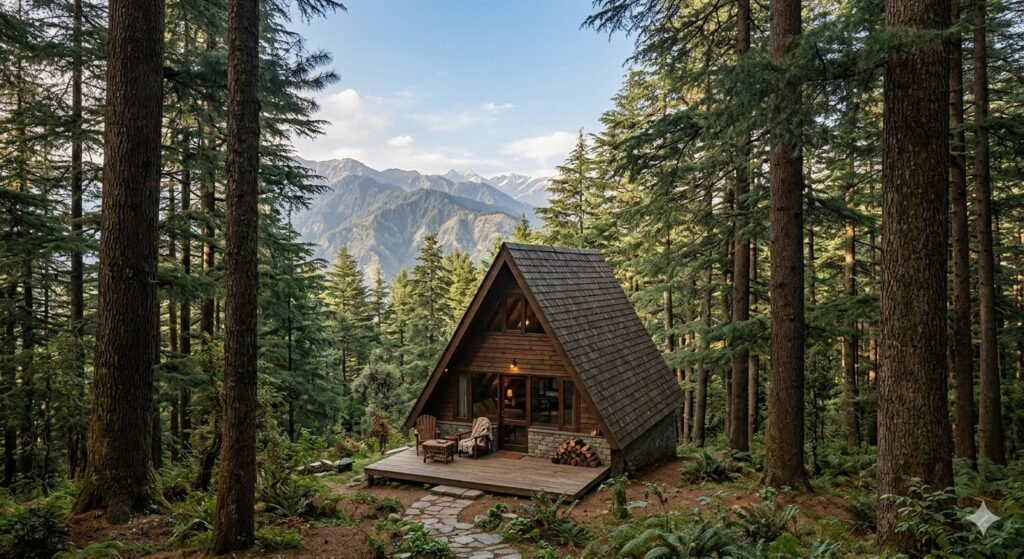
EVA Cabins in Dalhousie is designed around a nature-oriented cabin experience, with A-frame cabins set within a forested mountain environment. Its accommodation is positioned as a retreat for travelers looking for a quieter Himalayan stay rather than a conventional city-style hotel experience.
That makes it a natural option for travelers whose idea of a holiday includes spending meaningful time at the accommodation itself.
The appeal is less about ticking off attractions and more about having a mountain setting to return to after exploring the surrounding region.
If your ideal escape involves a cabin stay in the mountains, time in nature and a slower holiday rhythm, EVA Cabins can be one option to consider when planning a Dalhousie getaway.
For travelers who have decided that the mountains are calling this time, exploring a stay at EVA Cabins can be the next step.
Quick Decision Guide — Mountains or Beaches?
Still undecided?
Use this simple checklist.
Choose the mountains if you:
- Prefer cooler surroundings
- Enjoy forests and natural landscapes
- Like hiking or outdoor exploration
- Prefer quieter evenings
- Enjoy scenic road journeys
- Want a nature-focused holiday
- Like photography beyond the coastline
- Prefer cozy, intimate accommodation
- Enjoy slower mornings and flexible days
- Want to experience a Himalayan getaway
Choose the beach if you:
- Prefer warm weather
- Love swimming
- Want water-based activities
- Enjoy long afternoons outdoors
- Like coastal food and waterfront dining
- Prefer open horizons
- Enjoy seaside walks
- Want easy access to water activities
- Like a more social coastal atmosphere
- Would happily spend several hours doing very little beside the sea
And if you find yourself checking both lists, that is completely normal.
Your ideal holiday may simply depend on the time of year and what you feel like doing right now.
Final Verdict — Mountain Holiday or Beach Holiday?
So, mountain holidays vs beach holidays — which one wins?
There is no universal winner.
A beach vacation may be exactly what you need when you want warmth, water, swimming, coastal food and long stretches of uncomplicated leisure.
A mountain vacation may make more sense when you want cooler surroundings, forests, scenic landscapes, outdoor exploration and a quieter pace.
The decision can also change from one holiday to the next.
After a busy few months, you may want several days beside the sea with nothing on your schedule. At another point, you may want to leave the city behind, take the road into the hills and spend a few days surrounded by forests and mountain landscapes.
That is where the Himalayan experience becomes particularly appealing.
A place such as Dalhousie can offer the combination of landscape, outdoor experiences, local culture and slower travel without requiring your entire holiday to revolve around a rigid itinerary.
And if that sounds closer to the escape you are looking for, a cabin stay can make the accommodation itself part of the experience.
Sometimes the best holiday is not the one with the most activities.
It is the one that matches how you actually want to spend your time.
If that means choosing the mountains this time, a Himalayan stay at EVA Cabins in Dalhousie could be a fitting place to begin.
Frequently Asked Questions
1. Are mountain holidays better than beach holidays?
Neither is universally better. Mountain holidays tend to suit travelers who enjoy cooler environments, nature, walking and scenic landscapes, while beach holidays often appeal to people who prefer warmth, swimming and coastal leisure.
2. Which is better for couples, mountains or beaches?
Both can work well for couples. Mountains may appeal to couples seeking privacy, nature and a quieter setting, while beaches can be ideal for couples who enjoy swimming, waterfront dining and seaside activities.
3. Are mountains or beaches better for families?
It depends on the children’s ages and interests. Families who enjoy walking and outdoor exploration may prefer mountains, while families who enjoy swimming and water activities may find beaches more suitable.
4. Which is better for adventure travel?
Both offer adventure, but the activities are different. Mountains are generally better suited to hiking, trekking and land-based exploration, while beaches offer activities such as kayaking, snorkeling, surfing and boat trips where conditions allow.
5. Are mountain holidays more relaxing?
They can be, particularly for travelers who find quiet surroundings, nature and cooler weather relaxing. However, beach holidays can be equally restful for people who prefer swimming, sunbathing and unstructured time beside the water.
6. Which is better for a long weekend?
The best option depends on travel time and accessibility. For a short trip, choose a destination that allows you to spend most of the available time enjoying the destination rather than travelling to and from it.
7. What should I consider before choosing between mountains and beaches?
Consider the season, weather, travel time, budget, activities, companions, accommodation preferences and the type of atmosphere you want. Your preferred holiday style is usually more important than choosing a destination category.
8. What is the best season for a mountain holiday?
There is no single best season for every mountain destination. Conditions vary considerably according to altitude, region and weather. Check destination-specific conditions before planning your trip.
9. Why are Himalayan holidays popular?
The Himalayas offer a combination of mountain landscapes, forests, outdoor activities, local culture and varied accommodation experiences. Different destinations also provide very different styles of travel, from adventure-focused trips to slower nature-oriented stays.
10. What type of accommodation is best for a mountain holiday?
It depends on your priorities. Cabins, homestays, lodges and resorts can all work well. Travelers who want a more intimate, nature-oriented experience may particularly enjoy a cabin or homestay, while others may prefer the services and facilities of a resort or hotel.