
The Mountain Workation: How to Combine Remote Work with a Himalayan Escape
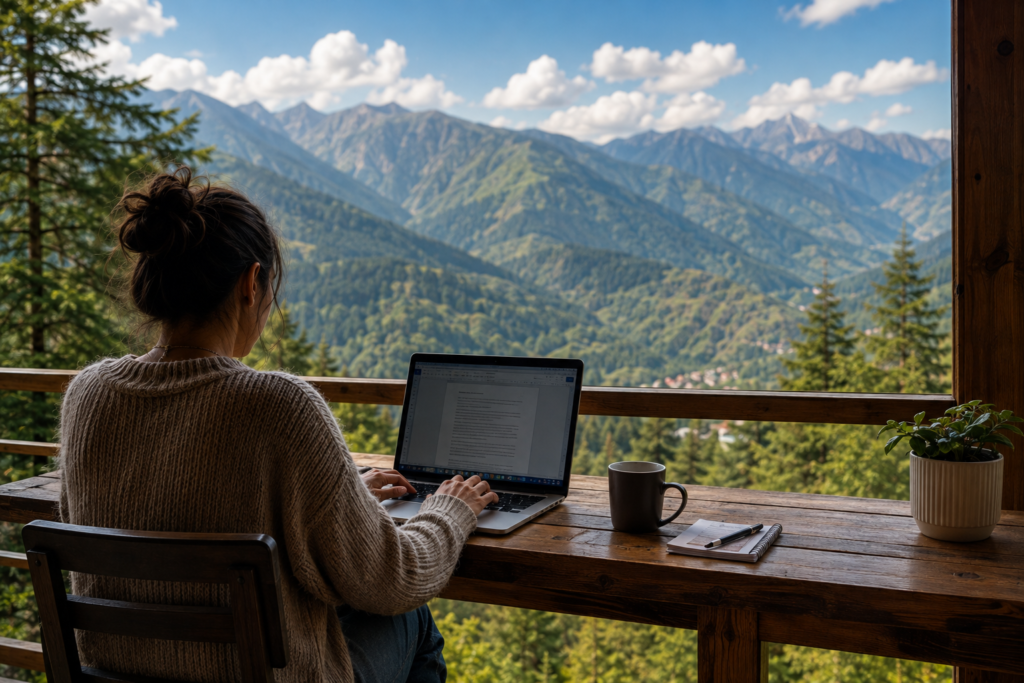
For many professionals, work no longer has to happen from the same desk every day. Remote jobs, freelance projects, flexible schedules and digital businesses have made it possible to spend a few days working from somewhere very different from home.
That shift has created a new style of travel: the mountain workation.
Instead of taking a complete break from work, travelers temporarily relocate to a mountain destination and build their working hours around the experience. The idea sounds appealing, but it requires more planning than simply packing a laptop and booking a room with a mountain view.
A successful mountain workation needs the right balance between connectivity, comfort, work discipline and time outdoors. A beautiful destination is helpful, but it cannot compensate for unreliable access to meetings, an uncomfortable workspace or a schedule that leaves no time to enjoy the surroundings.
Himachal Pradesh offers an interesting setting for this style of travel. Its hill destinations provide opportunities to change your environment without necessarily turning the trip into a conventional holiday. For travelers looking for a workation in Himachal Pradesh, the goal can be surprisingly simple: work properly during the day, then use the remaining hours to experience the mountains at a slower pace.
Dalhousie, in particular, can suit travelers who want their workation in Dalhousie to feel like more than working from another hotel room. With its mountain setting, forested surroundings and access to nearby nature experiences, it offers a different rhythm from a typical urban workday.
The key is to plan the workation around your actual job rather than assuming the destination will solve everything for you.
What Is a Mountain Workation?
A mountain workation is a temporary trip where you continue your professional responsibilities while staying in a mountain destination.
It sits somewhere between work and travel. You are not taking a traditional vacation because you still have meetings, deadlines or projects to manage. At the same time, you are not following a conventional work-from-home routine because your environment has deliberately changed.
This makes a mountain workation different from a business trip as well. A business trip usually revolves around a specific professional purpose, such as meetings, conferences or client visits. A workation, by contrast, is primarily about changing your living environment while continuing your normal work.
It is also different from the digital nomad lifestyle. Digital nomads may travel continuously between destinations while working remotely, whereas a workation can be as short as a few days or as long as several weeks.
The simplest way to think about it is:
A mountain workation is work with a change of scenery, rather than a vacation interrupted by work.
That distinction matters.
If you treat the trip like a holiday, you may end up trying to squeeze a full day’s sightseeing into the gaps between meetings. If you treat it exactly like being at home, you may spend the entire trip staring at your laptop and barely notice that you are in the mountains.
The better approach is to create boundaries between the two.
Why Are People Choosing to Work from the Mountains?
Remote work has changed what people expect from their working environment.
For some professionals, the ability to work remotely has removed the need to remain in one location throughout the year. That flexibility can create an opportunity to spend a few days somewhere that offers a different pace and atmosphere.
The attraction is not necessarily about becoming more productive simply because there are mountains outside the window. Instead, changing your surroundings can provide a break from repetitive routines.
A person who normally works from a city apartment may find that a few days in a quieter environment feel different from the usual cycle of commuting, working and returning home. Likewise, a freelancer or entrepreneur may appreciate having a clear separation between everyday surroundings and a temporary work period.
A mountain escape can also encourage a more deliberate daily rhythm.
You might start the morning without rushing through traffic, complete your main work commitments, and then spend an hour walking outside rather than immediately switching from one screen to another. Evenings can become an opportunity to eat locally, explore the surroundings or simply sit outdoors.
However, these benefits are personal rather than guaranteed.
Mountains do not automatically make someone more focused. Some travelers may find themselves distracted by the scenery, poor connectivity or the temptation to explore during working hours.
That is why the success of a Himalayan workation depends less on the destination alone and more on how well the traveler plans the relationship between work and travel.
Can You Really Work from the Mountains?
Yes, but you should approach it as a practical planning exercise rather than a spontaneous escape.
The first question is connectivity.
If your work depends on video meetings, cloud applications, remote servers or frequent file transfers, check the available internet and mobile network options before booking. Connectivity can vary significantly between properties and locations, even within the same mountain destination.
The second question is power.
A laptop can be essential for remote work, so power availability should never be assumed. A power bank can help with phones and smaller devices, while an extension board can be useful when your workspace has limited sockets.
Then comes the workspace itself.
A scenic balcony is not automatically a good office. You may need a proper chair, a stable surface and enough lighting to work comfortably for several hours.
Noise matters too.
A property that feels lively and enjoyable for a weekend holiday may not be ideal if you have client calls throughout the day. Likewise, road access, nearby construction, restaurant activity or shared common areas can affect your working environment.
Before booking a workation stay, ask yourself:
- Can I reliably connect to the tools I use for work?
- Do I need video calls every day?
- Is there a suitable place to sit with my laptop?
- What happens if the internet becomes unavailable?
- Is there a backup mobile network?
- Is power reliable?
- Can I get meals without spending large amounts of time travelling?
- Will weather affect my travel plans?
- How easy is it to reach the property?
The answers matter more than how attractive the property looks in photographs.
What Makes a Good Mountain Workation Destination?
A good destination needs to support both halves of the trip: the work and the experience.
Reliable Connectivity
Connectivity should be the first practical check for anyone whose income depends on being online.
Do not rely solely on a property description saying that Wi-Fi is available. Ask about the type of connection, whether it is suitable for video meetings and whether mobile networks work as a backup.
If your work is highly connectivity-dependent, consider carrying a second connectivity option.
A Comfortable Place to Work
You do not necessarily need a dedicated office.
However, you should have a comfortable chair, a stable work surface and enough space to use your laptop without spending the day balancing it on a bed.
For longer stays, this becomes even more important.
Peaceful Surroundings
A peaceful work environment can be valuable, particularly for people who spend much of their day on calls or need uninterrupted concentration.
At the same time, complete silence is not essential for everyone. What matters is choosing an environment that matches your working style.
Convenient Access
Mountain destinations often involve winding roads, changing weather and longer travel times than urban locations.
Therefore, check the final approach to your accommodation rather than considering only the distance to the destination.
Comfortable Accommodation
You may spend several hours working and several more sleeping, so comfort becomes particularly important during a workation.
Look beyond photographs and check practical details such as heating, bathroom facilities, workspace, meal availability and the type of accommodation.
Things to Do After Work
A workation becomes more meaningful when there is something to look forward to after closing the laptop.
That does not mean filling every evening with sightseeing. A short walk, local meal, viewpoint or quiet time outdoors may be enough.
Food and Daily Essentials
A workation becomes difficult when every meal requires a long journey.
Check whether food is available nearby or at the property, particularly if your work schedule includes evening meetings.
Weather and Seasonal Considerations
Mountain weather can affect roads, outdoor plans and travel schedules.
Before leaving, check the forecast and allow some flexibility in your itinerary.
Why Himachal Pradesh Works So Well for a Workation
Himachal Pradesh offers something particularly useful for remote travelers: variety.
The state includes destinations with very different landscapes, levels of development and travel experiences. Some are lively and highly visited, while others provide a slower environment suited to travelers who want to spend more time in one place.
For people interested in remote work in Himachal Pradesh, this variety means that the ideal destination depends on the nature of the job.
Someone with frequent client calls may prefer a property with dependable connectivity and easy access to daily essentials. Someone who works independently for several hours each day may place greater importance on privacy and surroundings.
The state also works well for travelers who want to combine work and travel without attempting to see everything during one trip.
Instead of changing hotels every two days, a traveler can stay in one destination for several days and explore only when work permits. This approach is closer to slow travel in Himachal Pradesh than a conventional sightseeing itinerary.
That slower approach can also make the trip easier to manage professionally.
You know where you will be staying, your working hours become predictable and your exploration can happen around your existing schedule.
Why Consider Dalhousie for a Mountain Workation?
Dalhousie offers a useful combination of mountain scenery, forested landscapes and access to nearby nature experiences. Himachal Pradesh Tourism describes the town as a hill station spread across five hills, with forest trails, wooded landscapes and views toward the surrounding mountain ranges.
That setting can work well for travelers who want a change of environment without turning the trip into a constant sightseeing exercise.
The advantage of a workation in Dalhousie is that your workday does not necessarily have to end with a long excursion. Depending on where you stay, the hours after work can be used for a short walk, a nearby experience, dinner or simply time outdoors.
Dalhousie also has established travel infrastructure. Official tourism information notes road connections and the availability of taxis and public transport, while mobile and internet connectivity are available in the town and nearby tourist areas. However, this does not mean every individual accommodation has identical connectivity, so travelers should still verify the conditions at their chosen property.
For someone looking for remote work in the mountains, that distinction is important.
You are choosing a destination with established infrastructure while still having access to the atmosphere that makes a mountain trip appealing.
How to Structure a Workation Day in the Mountains
A successful workation does not require an elaborate schedule.
In fact, keeping the day simple often works better.
Morning
Start with a quiet routine rather than immediately checking every notification.
Have breakfast, review your priorities and identify the work that genuinely needs to be completed that day.
If your schedule allows, a short walk before work can also create a clear transition between personal time and professional time.
Afternoon
Use the middle of the day for meetings, focused work and essential tasks.
If possible, group meetings together rather than allowing them to interrupt the entire day. This leaves longer periods for uninterrupted work.
Take a proper lunch break rather than eating while continuing to work.
Evening
Once the working day ends, close the laptop.
This is where the mountain part of the mountain workation begins.
You might walk through the surroundings, explore a nearby attraction, enjoy dinner or simply sit outside and watch the landscape change as the light fades.
The important thing is not how much you see.
It is the fact that work and personal time occupy different parts of the day.
How to Stay Productive During a Mountain Workation
The biggest productivity mistake is assuming that the destination will create discipline for you.
You still need a routine.
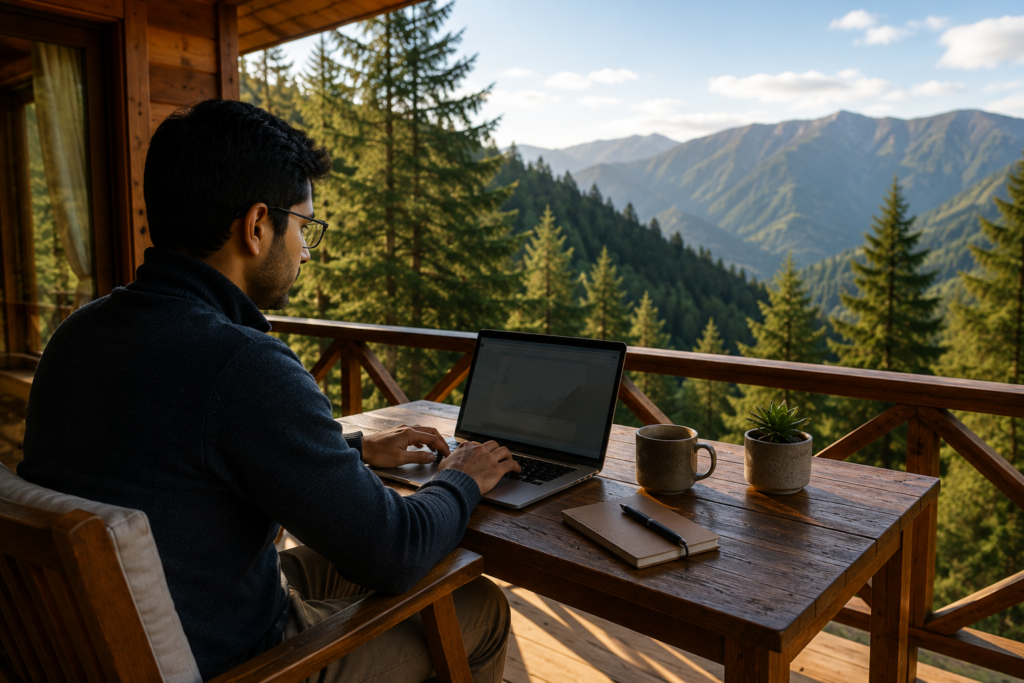
Set Working Hours
Define when your workday starts and ends.
If colleagues know that you are available during specific hours, maintaining those hours becomes easier.
Separate Work and Leisure
If possible, avoid working from the same place where you sleep.
Even a small outdoor seating area or separate table can create a psychological boundary.
Prepare for Connectivity Problems
Download essential files before travelling.
Keep important documents available offline and have a backup connectivity option if your work requires continuous access.
Protect Meeting Times
If you know that you have important meetings, avoid planning excursions around them.
Mountain roads and weather can make a supposedly short outing take longer than expected.
Do Not Overplan Sightseeing
A common mistake is trying to complete a full tourist itinerary while also maintaining a normal working day.
That defeats the purpose.
Choose one small experience after work rather than attempting five.
Take Intentional Breaks
A five-minute break away from the screen can be more useful than scrolling through another application.
Step outside, stretch, drink water or simply look away from the screen.
Tell Colleagues About Your Schedule
If necessary, let your team know that you are travelling while remaining fully available during your agreed working hours.
Clear communication prevents unnecessary confusion.
What to Pack for a Mountain Workation
A workation packing list should remain practical.
Work Essentials
- Laptop
- Laptop charger
- Phone charger
- Headphones
- Power bank
- Extension board
- Portable hotspot, where appropriate
- Essential documents and files
Mountain Essentials
- Comfortable clothing
- Weather-appropriate layers
- Walking shoes
- Personal toiletries
- Reusable water bottle
- Basic personal medicines
- Small day bag
The exact list depends on the season.
For example, winter travel requires substantially warmer clothing than a summer trip, while monsoon travel calls for additional attention to rain protection.
The principle is simple: pack for your work requirements and the actual mountain conditions, not for an imaginary version of the trip.
Workation vs Vacation: Which One Is Right for You?
| Factor | Traditional Vacation | Mountain Workation |
| Work commitments | Usually paused | Continue during the trip |
| Duration | Often shorter | Can be several days or longer |
| Daily routine | Flexible | Structured around work |
| Exploration time | Usually higher | Mostly before/after work |
| Accommodation | Comfort-focused | Comfort + work suitability |
| Planning | Mainly travel-focused | Travel + work planning |
| Internet needs | Basic | Potentially essential |
| Experience | Primarily leisure | Work combined with travel |
| Best for | People taking leave | Remote and flexible professionals |
Neither option is inherently better.
If you have paid leave available and genuinely need a break from screens, take a vacation.
If your schedule allows remote work but you need a change of environment, a workation may be more suitable.
The difference is ultimately about what you want the trip to accomplish.
Who Should Consider a Mountain Workation?
Remote Professionals
Employees with flexible remote arrangements can use a few days away from home to change their surroundings without taking additional leave.
However, workplace policies should always come first.
Freelancers
Freelancers often have greater control over their schedules, making a workation in Himachal Pradesh easier to plan around deadlines and client commitments.
Entrepreneurs
Business owners may appreciate a change of environment, particularly during periods when their schedules are flexible.
Still, important meetings and operational responsibilities need to remain the priority.
Creators
Writers, photographers, designers and other creative professionals may enjoy having a different environment around them.
However, inspiration should not replace a practical work setup.
Consultants
Consultants who work primarily online can potentially build a short mountain stay around their client schedule.
Who May Not Be Suited to It?
A mountain workation may not be appropriate if your job requires:
- Constant physical presence
- High-bandwidth uninterrupted connectivity
- Frequent last-minute travel
- Fixed office attendance
- Equipment that cannot easily be transported
In those situations, a conventional vacation may be a better choice.
When Is the Best Time for a Mountain Workation in Himachal Pradesh?
There is no single best season for everyone.
Spring
Spring can be appealing for travelers who want moderate weather and outdoor time without the colder conditions associated with winter.
Summer
Summer is popular for escaping the heat of the plains. Official tourism information describes Dalhousie’s spring and summer weather as generally pleasant, with March to June offering moderate conditions.
For remote workers, however, popularity can also mean greater demand for accommodation, so advance planning may be worthwhile.
Monsoon
Monsoon brings a different atmosphere, with mist, rain and greener landscapes.
However, travelers should pay greater attention to weather conditions, road conditions and travel flexibility.
If you have important meetings that cannot be missed, build additional buffer into your travel plans.
Autumn
Autumn can offer a quieter travel environment and cooler conditions.
It can suit travelers who prefer fewer distractions and want to combine focused work with outdoor time.
Winter
Winter changes the character of a Himalayan workation significantly.
Cold weather and possible snowfall can make the experience appealing to some travelers, but they also require better preparation. Warm clothing, weather awareness and flexible travel planning become more important.
The best season is therefore the one that matches your work requirements, weather tolerance and preferred mountain experience.
Choosing Accommodation for a Mountain Workation
Accommodation becomes more important when your room is also part of your working environment.
Start with connectivity.
Ask specific questions rather than assuming that a property is suitable for remote work.
Next, consider the workspace. A comfortable surface and chair can make a significant difference if you expect to work for several hours.
Privacy is another consideration.
Some professionals work best in social environments, while others need a quieter setting to concentrate.
Food also matters during a workation. If you have meetings throughout the day, easy access to meals can make your schedule considerably simpler.
Finally, consider accessibility.
A beautiful property may be worth the journey for a holiday, but frequent travel between the accommodation and town can become inconvenient when you are also managing work.
The best workation stay is therefore not necessarily the most luxurious property.
It is the one that fits the way you actually work.
Why a Cabin Can Be a Natural Fit for a Mountain Workation
Cabins offer a different accommodation experience from conventional hotels and larger properties.
For some travelers, the attraction is privacy. For others, it is the feeling of having a more personal relationship with the surrounding landscape.
That can make a cabin appealing for a mountain workation, particularly when the traveler wants the trip to feel like a temporary change of lifestyle rather than simply relocating their office.
A cabin can also create a clearer separation between professional and personal time.
You might work for several hours, close the laptop and then step outside instead of remaining in the same busy environment for the rest of the evening.
However, the cabin concept is not automatically better for every remote worker.
Someone who needs a business centre, conference facilities or constant interaction with colleagues may prefer a hotel.
The right choice depends on the person, the job and the purpose of the trip.
Experiencing a Mountain Workation at EVA Cabins
For travelers who want their workation to feel more like a mountain escape than a change of office, EVA Cabins offers a cabin-based option in Dalhousie.
The property describes its cabins as private spaces with outdoor seating areas that can be used for remote work, relaxation or enjoying the surroundings. Its official website also lists mountain views, in-house meals, heating and free parking at the trail base among its current features.
The approach is also somewhat different from a conventional roadside property. EVA Cabins currently states that vehicles cannot be driven directly to the cabins and that guests park at the trail base before taking a roughly 15-minute walk through the woods.
For some travelers, that transition can become part of the experience. For others, particularly those carrying substantial work equipment or travelling with mobility constraints, it is an important practical detail to consider before booking.
The property also has an in-house kitchen for guests, which can make daily meal planning simpler during a longer stay.
For a remote worker, the important point is to choose accommodation based on actual working requirements. If the property, connectivity arrangements and workspace suit your schedule, a cabin can provide a more nature-oriented setting for a mountain workation.
Plan Your Mountain Workation in Dalhousie
If you want to combine remote work with a few days in the mountains, explore EVA Cabins and choose the accommodation setup that matches your work routine, travel style and preferred pace.
Plan your mountain workation at EVA Cabins and give your working week a different Himalayan setting.
A Simple Mountain Workation Plan for Dalhousie
A good workation itinerary should leave room for both productivity and spontaneity.
Day 1: Arrival and Settling In
Travel to Dalhousie and settle into your accommodation.
Do not schedule important work immediately after a long journey if you can avoid it. Use the evening to check your workspace, connectivity, power arrangements and the practical details you will need for the next morning.
Day 2: Work + Evening Exploration
Follow a normal working day.
Once your work is finished, use the evening for a short local outing, walk or relaxed meal.
There is no need to turn the evening into a full sightseeing session.
Day 3: Focused Work + Nature Break
Complete your main work commitments during the day.
If your schedule permits, take a short break outdoors between work sessions. Keep the rest of the evening free rather than planning another demanding excursion.
Day 4: Work + Local Experience
Maintain your normal work routine.
Afterward, choose one experience that interests you. It could be a scenic location, a local meal or a quiet outdoor activity.
Day 5: Relaxed Morning + Departure
If possible, avoid scheduling meetings immediately before departure.
Have breakfast, finish packing and leave enough time for mountain travel conditions.
This kind of itinerary may look less ambitious than a traditional Dalhousie sightseeing plan.
That is intentional.
The purpose of a mountain workation is not to see everything.
It is to create a sustainable rhythm between work and travel.
Common Mistakes to Avoid on a Mountain Workation
Assuming Connectivity Without Checking
Never assume that a beautiful mountain property automatically has the connectivity you need.
Ask before booking.
Booking Purely for the View
A spectacular view does not help if you cannot comfortably work from the property.
Prioritize your practical requirements first.
Overloading the Itinerary
Trying to work eight hours and complete a full sightseeing schedule every day is a recipe for exhaustion.
Leave space between the two.
Forgetting Chargers
A missing charger can turn a relaxing trip into an unnecessary problem.
Pack your essential work equipment before leaving.
Ignoring Weather
Mountain weather can change travel plans.
Keep important commitments in mind when planning arrival, departure and excursions.
Working All Day Without Exploring
The opposite mistake is treating the workation exactly like working from home.
If you never leave the room, you are missing much of the reason for changing environments.
Treating the Trip Like a Normal Vacation
Your work responsibilities still exist.
Plan accordingly.
Treating the Trip Like a Normal Office
Your surroundings have changed for a reason.
Once the workday ends, allow yourself to experience the destination.
Final Thoughts
A mountain workation is not about escaping work completely.
It is about changing the environment in which work happens and creating a different rhythm between professional responsibilities and personal time.
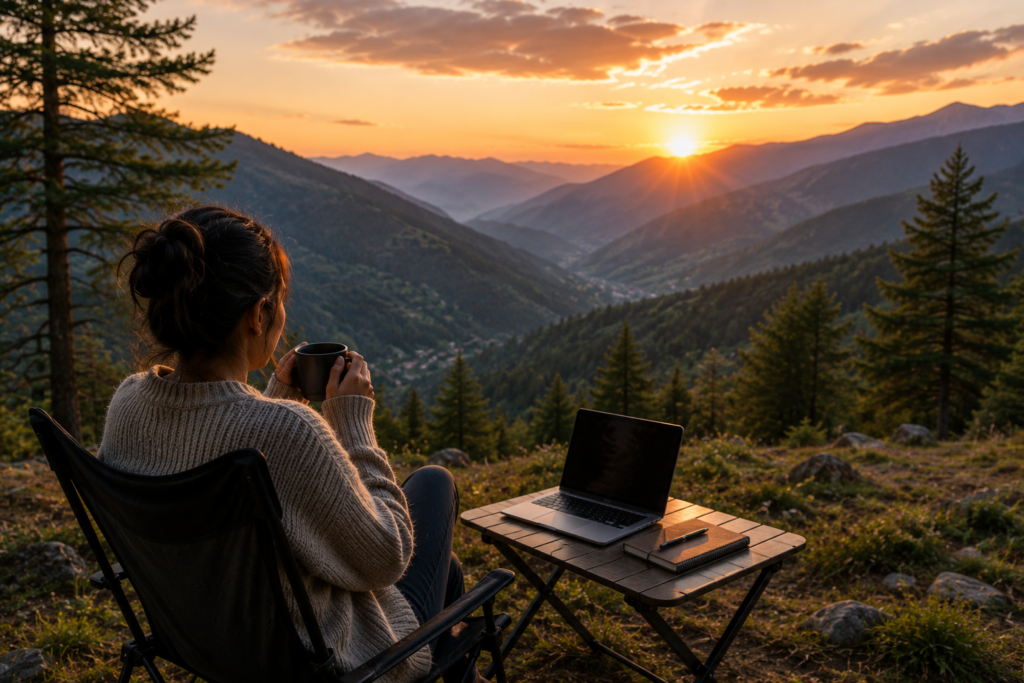
The concept works best when the practical details are taken seriously. Connectivity, power, workspace, weather, travel time and daily essentials should be checked before booking. At the same time, the trip should leave enough room to experience the destination instead of becoming another version of the office.
For travelers considering a Himalayan workation, Dalhousie offers an interesting balance of mountain surroundings, established travel infrastructure and access to nature experiences. Official tourism information also highlights the town’s forest trails, surrounding landscapes and road connectivity.
The accommodation you choose will then shape how that experience feels.
A hotel may work well for someone who values conventional services and easy access. A cabin may suit someone who prefers privacy, nature and a more personal setting. Neither is universally better; the right choice depends on how you work and what you want from the trip.
Ultimately, the best mountain workation is one where your laptop does not dominate the entire experience.
Finish the work that matters.
Step outside.
Explore a little.
Slow down.
Then return to work the next morning with a different view outside the window.
Frequently Asked Questions
1. What is a mountain workation?
A mountain workation is a trip where you stay in a mountain destination while continuing your normal remote work responsibilities. It combines professional commitments with time for travel, nature and relaxation.
2. Is Dalhousie good for a workation?
Dalhousie can be suitable for a workation because it combines a mountain environment with established tourism infrastructure and access to nearby nature experiences. However, travelers should verify connectivity and accommodation facilities based on their specific work requirements.
3. Can I work remotely from Himachal Pradesh?
Yes, remote work can be possible from many destinations in Himachal Pradesh. However, internet reliability, mobile coverage and power availability can vary between locations, so these should be checked before booking.
4. What should I check before booking a workation stay?
Check internet connectivity, mobile network options, power availability, workspace, noise levels, food arrangements, accessibility and weather conditions. If your job involves video calls, specifically ask whether the connection is suitable for them.
5. What should I pack for a mountain workation?
Carry your laptop, chargers, headphones, power bank, extension board and any backup connectivity equipment you need. You should also pack comfortable clothing, walking shoes and weather-appropriate layers.
6. Is a cabin suitable for remote work?
A cabin can be suitable for remote work if it provides the privacy, workspace, connectivity and power arrangements you need. However, travelers should verify these requirements before booking rather than assuming every cabin offers the same setup.
7. How many days should a mountain workation last?
There is no fixed ideal duration. Three to five days can provide enough time to experience a destination without requiring a long absence from work, while flexible professionals may prefer longer stays.
8. What is the best season for a workation in Himachal Pradesh?
The best season depends on your priorities. Spring and summer can offer comfortable conditions in destinations such as Dalhousie, while monsoon, autumn and winter provide different experiences with their own weather and travel considerations.
9. Is a mountain workation the same as being a digital nomad?
Not exactly. A mountain workation is usually a temporary stay in one destination while continuing your normal work, whereas digital nomads often travel between destinations for extended periods while working remotely.
10. How can I stay productive during a mountain workation?
Set fixed working hours, create a dedicated workspace, prepare backup connectivity, protect important meeting times and avoid overplanning sightseeing. Most importantly, establish a clear point at which the workday ends.